More and more establishments, from restaurants to healthcare centers, are designating part of their bathrooms for people with disabilities who have special physical needs. To meet this demand, our company specializes in providing solutions for this purpose, which is why we offer our contact service to renovate and adapt accessible bathrooms for people with disabilities.
Bathrooms in any space can be adapted to accessibility regulations. In this way, it is possible to respond to the needs of all citizens, regardless of whether they have any physical impairment or not.
Contenidos
What regulations must a bathroom for people with disabilities comply with?
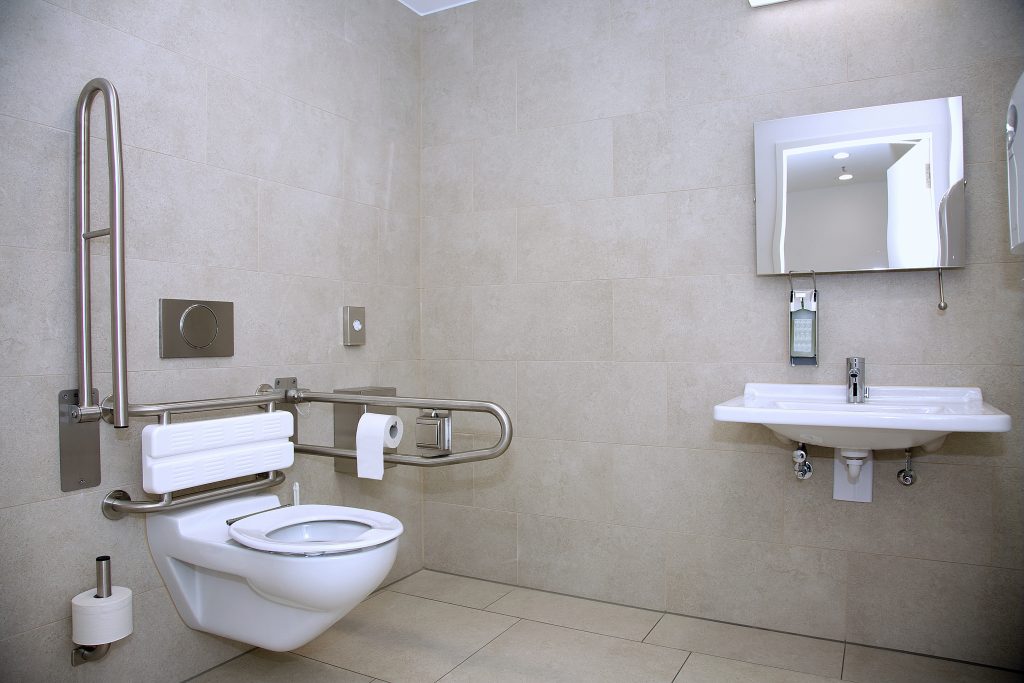
In Spain, the regulation that governs the requirements and conditions that bathrooms must meet to be accessible is Accessibility Law 10/2014. This regulation establishes that it is mandatory for public buildings to have accessible restrooms for people with disabilities.
However, this legislation does not regulate the issue of accessible bathrooms exhaustively, so we must refer to the regulations in order to determine the basic requirements that sanitary facilities and the spaces where they are located must meet.
In short, Accessibility Law 10/2014 only obliges public spaces to provide accessible bathrooms, and it is Royal Decree 173/2010 that establishes the requirements that accessible bathrooms must meet, approving the Basic Document on Safety of Use and Accessibility (DB-SUA).
Who does this regulation affect?
To understand who this regulation affects, it is important to look at its scope of application, which coincides with the Technical Building Code:
-
Public and private buildings that require a license to open their doors to the public.
-
Newly constructed buildings.
-
Extension, rehabilitation, renovation and modification works.
In short, the Basic Document on Safety of Use and Accessibility (DB-SUA) will apply to building works with the aim of not only achieving accessible buildings for people with disabilities, but also protecting against the risks involved in work activities, as well as the use of facilities and building areas.
As it applies to building works, the DB-SUA affects those involved in the construction process, specifically the following professionals:
-
Builders.
-
Developers.
-
Property owners of the project.
How to achieve accessible bathrooms
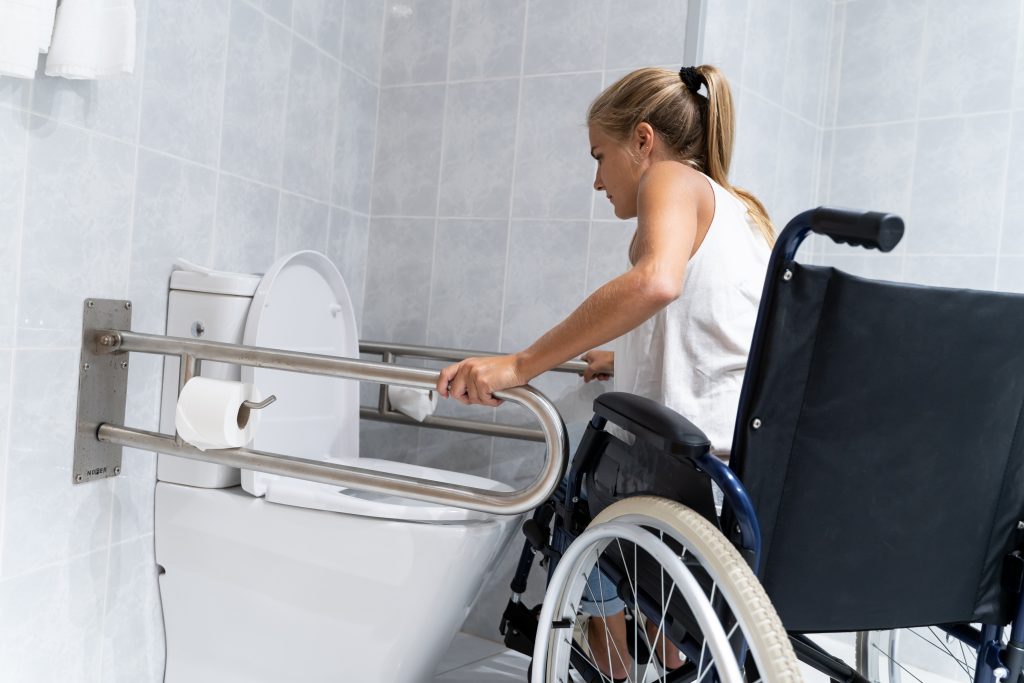
To achieve an accessible bathroom, the following requirements must be met:
1. Flooring
When creating an accessible space where safety for people with disabilities is a priority, flooring is a fundamental element. The floor of adapted bathrooms must be non-slip, regardless of whether it is dry or wet.
On the market, there is a wide range of floors with anti-slip treatment that optimize safety in the bathroom and also offer many other advantages, from aesthetics to easy maintenance.
2. Mirror
The bathroom mirror must be at least 46 centimeters wide and 137 centimeters high. In addition, it must be installed in such a way that both a seated person and a standing person can use it. On the other hand, the mirror may be tilted, with a maximum inclination of 10 degrees.
3. Signage
Another element that supports accessibility in restrooms is signage. For this purpose, tactile pathways will be very useful elements marked on the floor. These are specially designed so that any person, regardless of their specific needs, can access the bathrooms independently and safely, facilitating orientation for those with visual or spatial disabilities.
Thanks to signage, it is possible to warn about obstacles in the restroom, allowing users with visual impairments to orient themselves better.
4. Assistive support systems
Through these innovative assistive support systems integrated into adapted bathroom facilities, people with special needs who use them can communicate with assigned staff and also alert them in case of need or emergency.
These systems provide greater security in these spaces, in addition to making alarm visualization and notifications easier. It is possible to choose combined solutions that offer the option to notify the responsible person via SMS or email if the user with special needs has encountered a problem. It is also possible, in the case of hospital restrooms, for an alert to be sent to the control station in case of emergency.
Measurements for an accessible bathroom
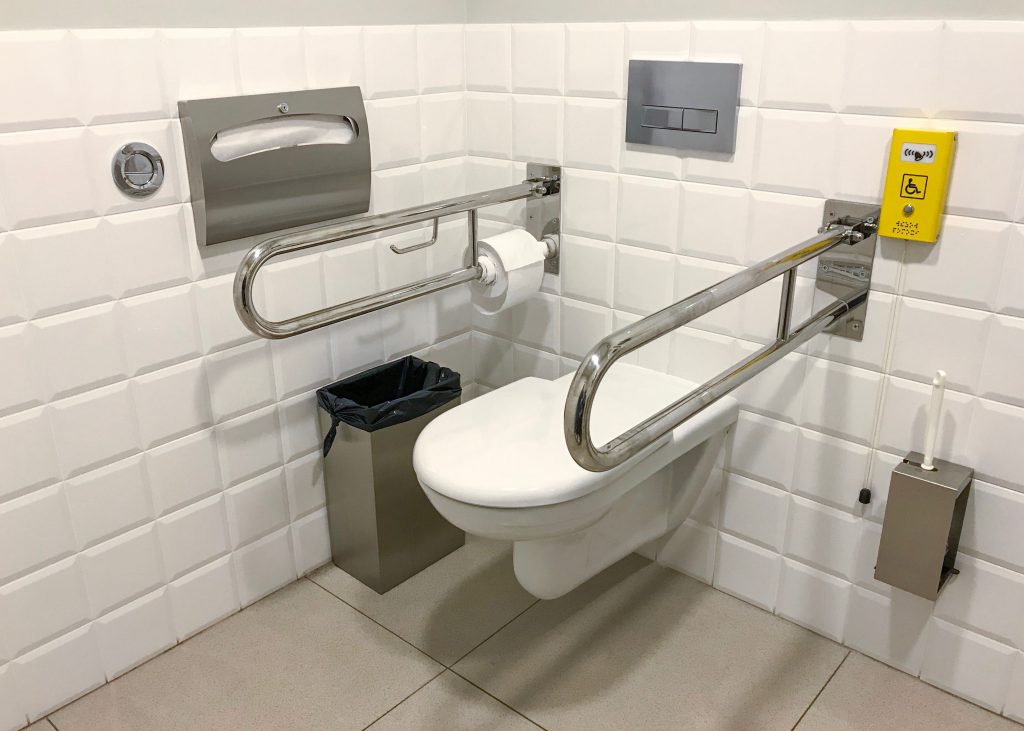
It should be remembered that accessible sinks must have sufficient dimensions so that a person who uses a wheelchair can access these spaces and move freely. Therefore, the required measurements must always be respected.
Restrooms for people with special needs must have an interior space that allows for a turning circle of 1.5 meters in diameter. In addition, this circle must be free of obstacles and outside the sweep of the access door, which must open outward or be sliding.
Facilities for people with disabilities must comply with certain conditions set out in the accessibility regulations for bathrooms. This legislation protects the right to accessibility for people with functional diversity. Not only that: these regulations also seek to ensure that spaces in any public building are safe for all citizens, regardless of the difficulties they may have.
However, to achieve truly accessible bathrooms, it is not only necessary to strictly follow the applicable regulations, but also to rely on the services of a specialized company like ours. Thanks to our high level of expertise, we can provide the best solutions for your project.