Data transmission is a basic task in any healthcare environment where information must flow in real time to guarantee the best patient care. Network cables play a fundamental role in the network infrastructure, as they are the pathways through which data travels across the entire wiring system of a hospital or healthcare center. Below, we provide you with valuable information about the types of network cables and their characteristics. If you would like to learn more about a relay and how it works, do not hesitate to visit the previous link.
Contenidos
Types of cabling in healthcare networks
In healthcare and hospital environments, there are countless pieces of equipment and devices interconnected to enable fast and efficient data transfer.
Using appropriate network cabling is essential to ensure that this exchange of information takes place in real time. This facilitates the work of professionals and helps care for the health and well-being of patients. Among the different types of network cables that exist, we can highlight:
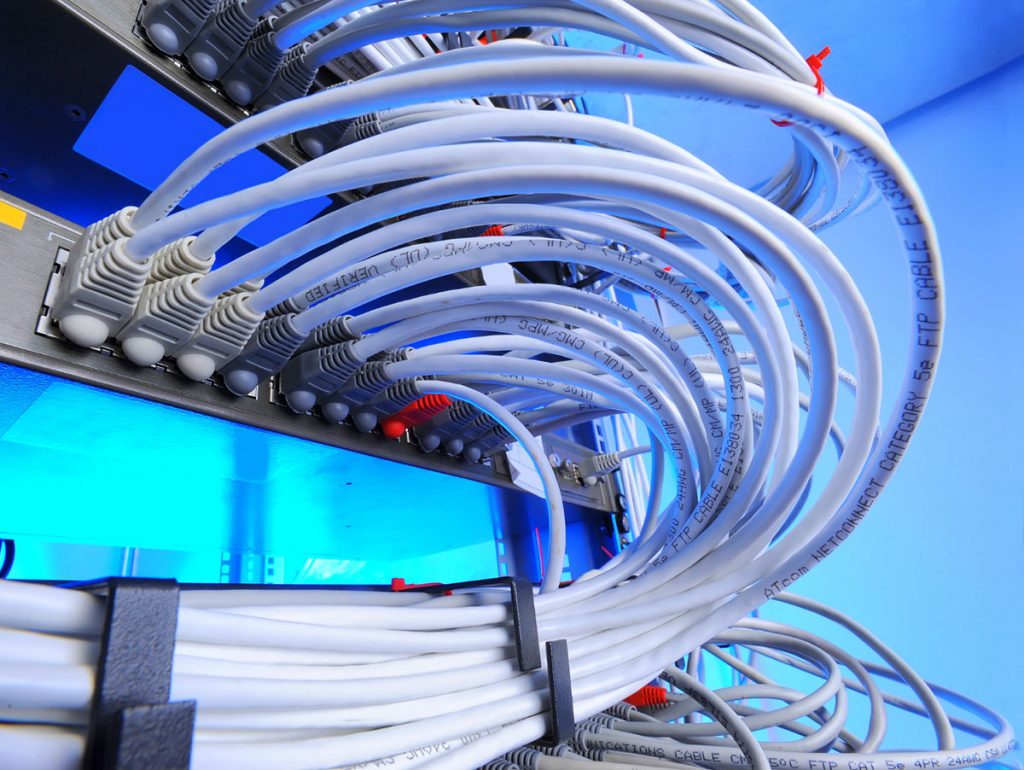
FTP cable (foiled twisted pair)
FTP cable is a variant of twisted pair cable that has a metallic foil layer that covers the cable pairs and acts as a protective shield against external electromagnetic interference.
This metallic layer prevents electrical signals from escaping the cable and protects data transmission against external electromagnetic interference, such as that generated by nearby power cables or electronic equipment.
UTP cable (unshielded twisted pair)
It is one of the most common types of cables used in local area networks and is made up of twisted copper pairs without any external shielding layer (each pair consists of two insulated copper wires twisted together).
It is a more economical type of cable and facilitates installation work due to its great flexibility.
STP cable (shielded twisted pair)
STP cable adds a protective layer to the UTP type, with an external shielding that wraps the individual cable pairs, providing an ideal protection environment (against electromagnetic currents mainly generated by nearby power cables or electronic equipment).
This type of STP cable is a variant that incorporates double shielding and is currently the highest-quality type of cable (normally used in category 6, 7 and 8 cables), making it ideal for healthcare environments where maximum protection against electromagnetic interference is essential.
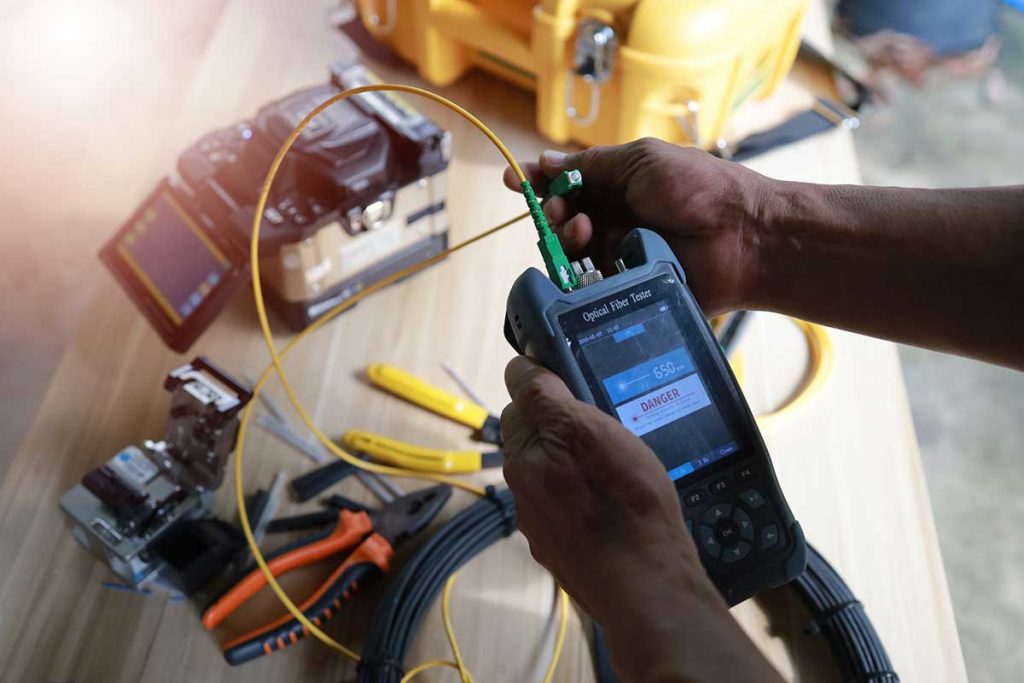
Fiber optic cable
Fiber optic cable is a type of cable used for data transmission through light pulses, instead of using electrical signals like copper cables. Data is transmitted using extremely thin strands of glass or plastic (optical fibers). This allows for greater bandwidth capacity and longer transmission distances.
Features
In a hospital, health center, or medical clinic, it is important to have an adequate network infrastructure that uses cables specifically focused on their particular needs. Some of the most important characteristics that network cables should have in these environments are:
Protection against electromagnetic currents
Network cables must be used that have protection against currents generated by electrical equipment and the electrical network itself.
Antibacterial protection
These are cables specially manufactured for use in the healthcare sector, featuring a special external protection that prevents the proliferation of bacteria (staphylococcus, E. coli, MRSA, etc.).
Category
Cables should be installed with a category that guarantees high data transmission speed, without distance causing losses (as is the case with categories 6, 7, and 8).
Connectors
Network cables must have connectors with different types of protection (against electromagnetic currents, dust and other external agents, accidental disconnections, resistance to tension or pulling, etc.).
Regulations to consider
For the implementation of transmission and communication infrastructure services in hospitals, it is necessary to take into account different aspects, such as technical considerations, fire safety, electromagnetic compatibility, and confidentiality.
Mandatory regulations in Spain
- Low Voltage Regulation
- General-purpose structured cabling (ISO/IEC 11801).
- Information Technology – Local and metropolitan area networks, as well as updates for various signaling techniques (IEEE 802.3).
- Fire Protection Control (NBE-CPI 96).
- Regulations on electromagnetic compatibility (R.D. 444/94).
- Data protection regulations (GDPR and LOPD).

Technical regulations
It is also important to take into account some regulations focused on technical aspects such as:
- Network insulation (ISO/IEC 60601).
- Antibacterial Ethernet cabling (UTP 24AWG or S/FTP 26AWG).
- Telecommunications cabling for commercial buildings (EIA/TIA SP-2840).
- General-purpose structured cabling (EIA/TIA 568).
- Pathways and spaces for telecommunications equipment in commercial buildings (EIA/TIA 569).
- Additional specifications for UTP cable (EIA/TIA-TSB-36).
- Additional specifications for UTP cable (EIA/TIA-TSB-40).
- Fiber optic installation cabling (EIA/TIA PN 3012).
We have reviewed the types of network cables and their characteristics so that you can better understand the existing alternatives and which ones best adapt to your infrastructure and communication needs. In a healthcare environment, it is important to comply with current regulations and use cabling that protects data transmission from generated electromagnetic currents, as well as opting for antibacterial Ethernet cable types (which inhibit bacterial growth).
At Advantecnia, we are professionals specialized in hospital communication and assistance systems, and we help you find the best solution for your business. Don’t hesitate to contact us to receive a proposal tailored to your company’s specific characteristics and needs.