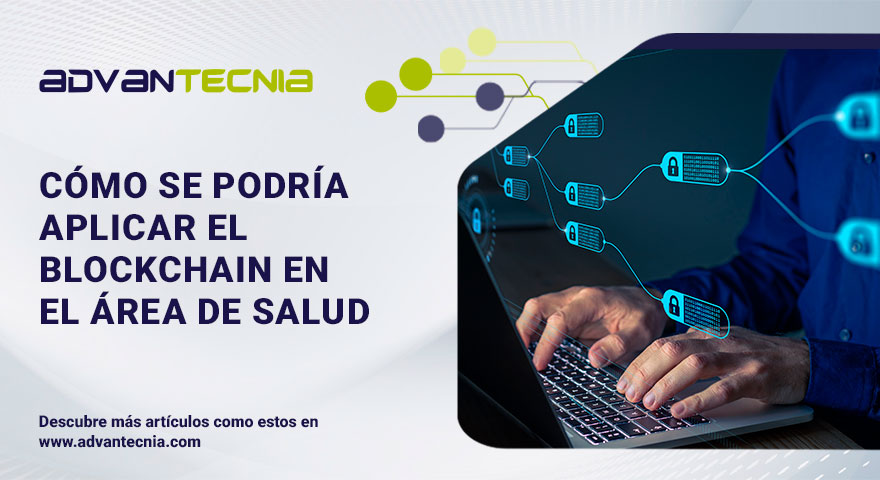
Blockchain is a term that is immediately associated with cryptocurrencies, although it is a very interesting system for ensuring the transfer and storage of information, as it is based on an environment interconnected by multiple nodes, which means that any variation in the data is recorded globally.
At Advantecnia, we are specialists in communication systems for hospitals and have many years of experience in this sector. Below, we provide information about blockchain and how it could be applied in the healthcare sector.

Contenidos
What is blockchain?
Blockchain, or distributed ledger technology, is a data-recording technology that ensures the security and transparency of all information transmissions carried out within its environment.
It is a distributed and shared database that records all digital transactions or events in an efficient, verifiable, and permanent way, as information is stored in blocks that are cryptographically linked to each other. In this way, the validation system is autonomous and does not require an external agent to carry it out.
Although blockchain is mainly known for its use in the world of cryptocurrencies, the reality is that it is a robust and highly secure system with applications in many different areas and sectors.

How blockchain could be applied in the healthcare sector
Blockchain is a type of technology that provides a high level of security while making the involvement of a third party unnecessary to guarantee data reliability. For these reasons, it is an ideal system for healthcare environments, which is why there are various interesting applications, such as the following:
Improving the security of medical records
Blockchain technology allows the creation of permanent medical records to ensure patient privacy and efficiency in data exchange among different professionals in the sector.
Optimizing the pharmaceutical supply chain
This digital environment offers complete traceability of the pharmaceutical and medication supply chain, from production, through distribution and storage, to final consumption by the patient.
The system makes it possible to ensure the quality and integrity of products and facilitates more accurate and secure home deliveries.
Facilitating the sharing of medical data for research purposes
There are specialized platforms that use blockchain to allow patients to contribute anonymously to medical research. By guaranteeing the privacy of their personal and medical data, all the information they share helps advance the development of treatments and disease studies.
Fighting counterfeit medicines
One of the major problems faced by the healthcare sector is the counterfeiting of medicines—that is, the existing market of medical products and medicines that are not approved and have not passed strict mandatory controls.
Implementing a blockchain system in medicine tracking helps verify authenticity and prevents the circulation of counterfeit products, which increases patient safety and helps ensure the profitability of businesses in the sector.
Protecting the privacy of medical documentation
Blockchain-based tools help protect medical documentation by guaranteeing its privacy (data is not accessible to unauthorized third parties) and integrity (data is not modified during transmission), in addition to simplifying access processes through efficient and robust authentication systems.
Automating important processes
It is possible to automate many important processes and tasks within healthcare environments. For example, blockchain allows health insurance companies to automate management processes, which reduces fraud and improves efficiency in transactions between insurers and policyholders, while also adding a high level of transparency.
Sharing data between organizations
Thanks to different projects based on blockchain technology, it is possible to unify and securely share medical data. This improves collaboration between different organizations and companies in the healthcare sector.

Use cases of blockchain in healthcare
Currently, blockchain technology is applied in the healthcare sector across many important tasks and areas:
- In telemedicine, to offer remote medical services with a high level of quality and security (real-time collection and storage of patients’ biometric data).
- To monitor medications throughout the distribution chain (for example, ensuring that the cold chain is not broken during transport).
- To manage all the information captured by IoT devices, such as pacemakers or sensors, ensuring it is transferred to hospitals and healthcare centers quickly and securely.
- Implementation of the health passport, something that is now essential in a globalized environment.
- Managing databases that contain sensitive patient information (such as medical records).
- Secure and decentralized management of clinical trials, which is essential to increase transparency and avoid potential fraud and errors.
- Facilitating interoperability between different healthcare systems, allowing secure exchange of clinical and financial information between hospitals, clinics, and other sector stakeholders.
- Verifying the credentials of healthcare professionals, ensuring they have the necessary certifications to practice and preventing the illegal practice of medicine.
We have shown how blockchain could be applied in the healthcare sector, a technology that, due to its characteristics, is ideal for maintaining the security of sensitive information handled in this sector. Get in touch with us so you can enjoy personalized support that takes into account the specific characteristics and needs of your business.