In the world of engineering, one of the most widely used terms is the CAN Bus protocol. This communication system is very widespread in different environments, including hospitals, healthcare centers, and residences, where its ability for real-time data transmission and reliability are fundamental to ensuring the safety and well-being of patients and staff.
What is the CAN Bus protocol?
The CAN Bus protocol is a communication standard used in distributed electronic systems. CAN is the acronym for “Controller Area Network”, meaning Controller Area Network. In the field of computing, it refers to an element that transmits a high amount of information.
This protocol was developed in the 1980s by the German company Bosch, initially for use in automobiles, but today its use has expanded to different sectors, including industrial, medical, and public services. If you need more information about how this protocol is implemented in hospital equipment, you can get in contact with us at Advantencia to resolve all your questions.
The CAN Bus protocol is used to transmit information between different electronic devices, such as sensors, actuators, controllers, and other peripheral devices. Its main advantage is that it allows real-time communication in a hostile environment, that is, with high levels of electromagnetic interference and noise.
How does the CAN Bus protocol work?
Industrial communication buses are systems designed to allow efficient and reliable communication between devices and control equipment. This facilitates process automation and enables precise monitoring of operations. There are many models of communication buses, although one of the most widely used in hospital management is the CAN Bus.
The CAN Bus system works by transmitting messages between different devices. Each message has a unique identifier that serves to distinguish it from other messages on the network. Messages are transmitted through a shared data bus, which means that all devices connected to the network can receive the message.
The CAN Bus protocol uses a differential serial communication scheme, which means it uses two data transmission lines that are in opposite phase. This reduces electromagnetic interference and noise, improving the reliability of communication.
In addition, the CAN Bus protocol uses an arbitration system to ensure that messages are transmitted correctly and without interference. Each device on the network has a unique identifier that is used to determine which device has priority to transmit a message. In this way, message collisions are avoided and messages are ensured to be transmitted in the correct order.

Characteristics of the CAN Bus system
The CAN Bus protocol has several characteristics that make it ideal for use in environments such as hospitals and residences.
-
Real-time communication: the CAN Bus protocol allows the transmission of messages in real time, which means that connected devices can communicate and make decisions in real time.
-
Reliability: the CAN Bus system is designed to be highly reliable. It uses a differential communication scheme and an arbitration system to minimize collisions and transmission errors.
-
Flexibility: the CAN Bus protocol is highly flexible and can be used in a wide variety of applications. It is compatible with different types of devices and can be configured to meet the specific needs of an application.
-
Low cost: the CAN Bus system is relatively inexpensive compared to other communication systems. This is partly because it uses a shared data bus, which means that several devices can be connected to a single network.
-
Easy installation: the installation of this system is relatively simple. Devices are connected using a single cable and do not require complex configuration. In addition, the simplicity of the system helps reduce installation and maintenance costs.
Components of the CAN Bus system
A CAN Bus system consists of several main components that enable effective communication between connected devices. These components include:
-
CAN controller: the CAN controller is the brain of the system and is responsible for managing the transmission and reception of messages between connected devices. It controls the transmission speed, synchronization, and message priority.
-
CAN transceiver: the CAN transceiver is responsible for converting the voltage levels of the transmitted data between the controller and the CAN communication line. It acts as an intermediary between the controller and the physical bus wiring, enabling data transmission and reception.
-
Termination resistances: these resistors are connected at the ends of the CAN bus and help prevent signal reflections. They help maintain signal integrity by matching the bus impedance to the cable length and the number of connected devices.
-
CAN cabling: the cabling is the physical medium through which data is transmitted on the CAN bus. It consists of two types of twisted cables to minimize electromagnetic interference and ensure reliable communication: the CAN-High (H) cable and the CAN-Low (L) cable.
It is important to select high-quality components and follow technical specifications in order to ensure optimal system performance.

What are some specific applications of industrial communication buses in hospitals and residences?
The CAN Bus protocol can be used in a variety of applications in hospitals and residences to ensure the safety and efficiency of staff and patients.
-
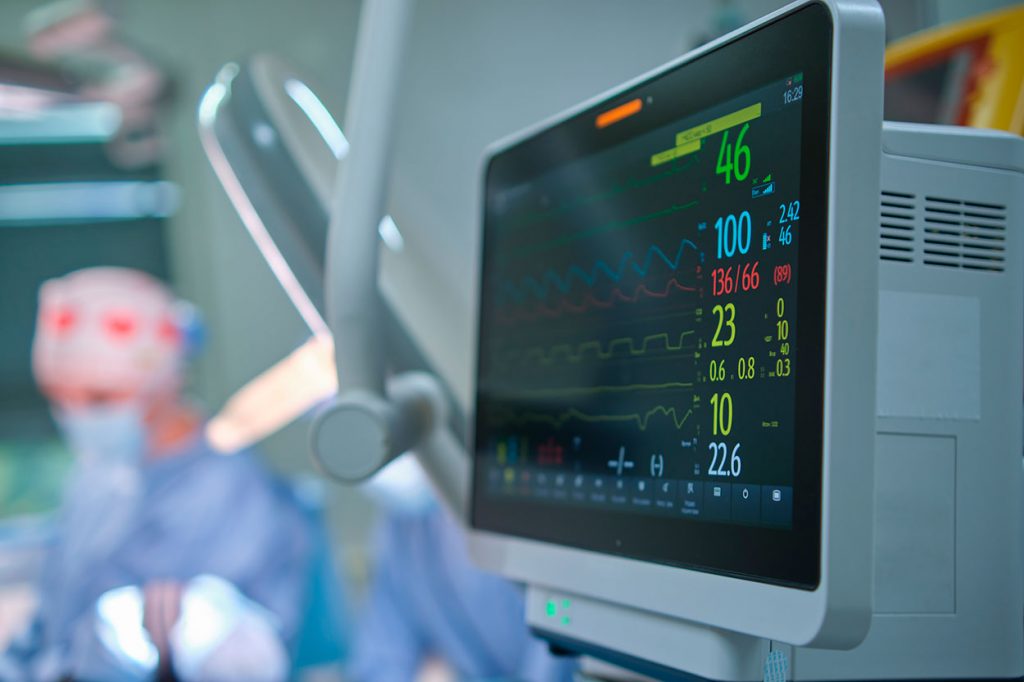
Patient monitoring systems: these systems use sensors to measure and transmit vital information about patients’ health status. The CAN Bus protocol is used to transmit this information to control and visualization systems, allowing medical staff to monitor patients in real time and make informed decisions about their care.
-
Access control and security: this protocol is also used to connect access and security control devices, such as surveillance cameras, motion sensors, and alarm systems. This allows residents and medical staff to feel safe and protected at all times.
-
Building automation: this automation allows control and monitoring of lighting, heating, ventilation, and air conditioning systems, among others. This enables precise and efficient control of building systems, reducing energy costs and improving user comfort.
-
Medication management systems: through pumps and other devices, medications can be administered to patients. The CAN Bus protocol is used to control and monitor these devices, ensuring accurate and safe medication administration.
The evolution of the CAN Bus protocol has enabled real-time data communication that is highly reliable, flexible, and low cost. These characteristics have made it a fundamental information technology in various industrial sectors. At Advantecnia, we strive to stay at the forefront of the latest trends and technologies to offer our clients efficient and customized solutions in the field of data communication. Do not hesitate to contact us if you need advice or support in this area.