Improving security in hospitals is one of the main objectives that managers of these centers have set in recent years.
Hospitals are places people go to receive a diagnosis, undergo treatment, and, in general, recover their health, and while they are there, they deserve to be as protected as possible at all levels, just like the workers who carry out their duties in the hospital.

Contenidos
What is the importance of security in hospitals?
Any place where a large number of people gather involves certain risks: a possible fire, an elevator breakdown when it is full, the entry of people intending to steal personal belongings, etc.
While maintaining security in buildings with many people is always essential, it becomes even more important when we talk about such a critical infrastructure as a hospital. A healthcare center is essential for the functioning of society, as it provides an absolutely necessary service.
When it comes to hospital security, it is not only about protecting the building itself, but also the people inside it, which is what makes risk-reduction measures so important.
Most commonly used security systems for hospitals
Closed-circuit television (CCTV)
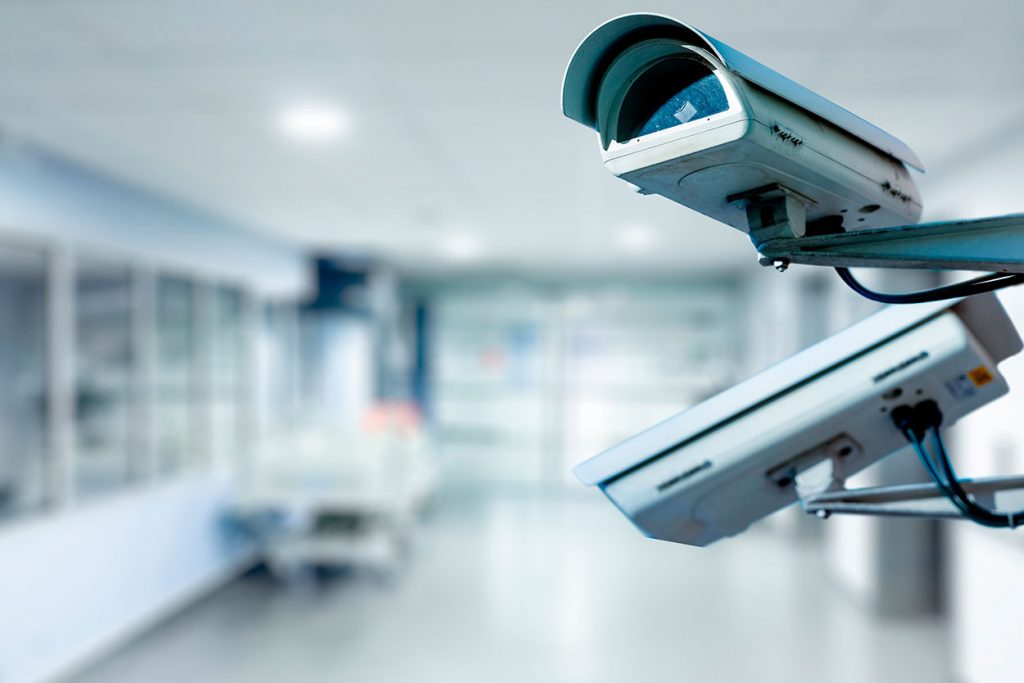
CCTV is an essential security element in all types of buildings with a high flow of people, and especially in hospitals. What these cameras do is monitor public areas to guarantee safety, without affecting people’s privacy.
The images can be very helpful when it comes to resolving all kinds of security incidents, and cameras often act as a deterrent against individuals with bad intentions.
Access control
In a hospital, there are public access areas, patient areas, areas for medical staff, etc., and security in all of them requires access to be as controlled as possible. That is why access control systems are used.
For example, electronic keys that only certain staff members have and that grant access to areas that must remain more protected, such as operating rooms.
Alarm systems
Alarm systems are essential to alert that an incident is occurring. Alarms can warn of an intruder in an unauthorized area, but they also alert about the presence of fire or smoke, and even substance leaks.
Patient monitoring
Telematic wristbands and other systems make it possible to reinforce the security of patients who, due to their characteristics, could get lost or even be abducted. They are generally used with children, in geriatric areas and in psychiatric wards.
Emergency communication systems
These are comprehensive and complex systems that are usually made up of audio and video systems, in order to quickly see what is happening and provide an efficient response if there is a real threat.
Security systems for hospitals according to the area
Emergency department
The emergency department is one of the most crowded areas in any hospital. In addition to healthcare staff and patients, there are also family members waiting for news, which increases the risks. That is why in this area we can find different security systems such as alarms, access control and CCTV, in order to detect possible intrusions and other risks, such as a fire.
Pharmacy storage
In this area, the most common risk is theft, and the most efficient way to prevent it is by installing an access control system and an alarm.
Children’s area
To prevent child abductions, access control systems and closed-circuit television (CCTV) are the most common and effective mechanisms. In the case of babies, monitoring systems are also usually used to ensure they are with their parents at all times.
Laboratories
Here there is also a risk of theft, so CCTV systems are usually combined with alarm systems.
Psychiatric ward
In this area, access controls and security airlocks are reinforced, and there is usually a presence of security personnel in order to prevent possible escapes or aggressions by patients.
Parking areas
Video surveillance is complemented with access control systems that record the license plates of the vehicles that enter.
Waste area
As this is a particularly sensitive area, since it may contain hazardous waste, CCTV systems are usually used together with access control systems.
Advantecnia security systems
At Advantecnia, we specialize in automation and security, offering complete systems that allow us to automate security controls in all types of buildings, especially hospitals.
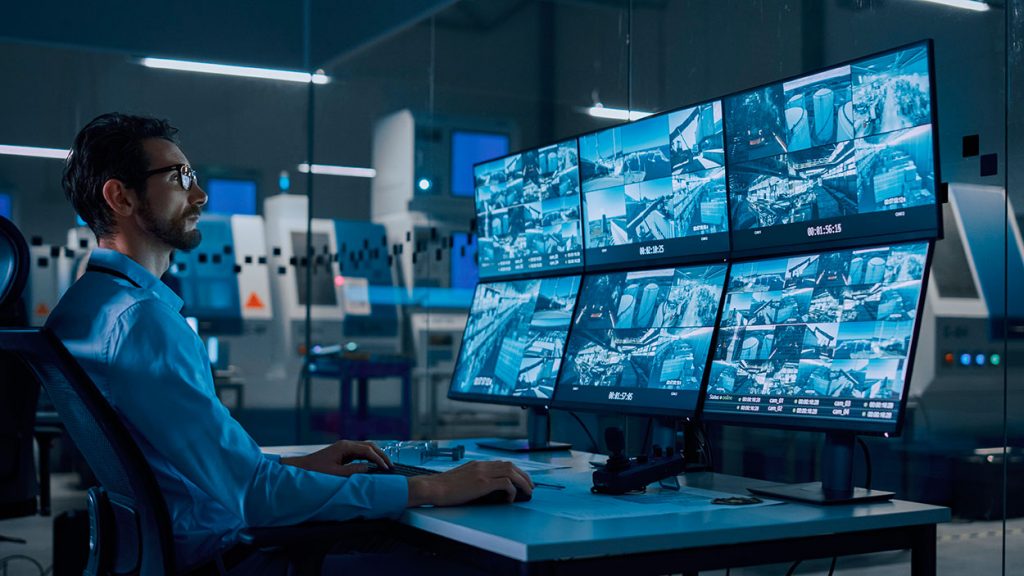
For example, a digital entry and exit control system that records who has accessed certain areas and at what time, as well as video surveillance systems, public address systems and alert broadcasts, among others.
The combination of several of these systems with latest-generation technology and easy management makes it possible to keep all hospital areas that require special protection under control, as well as to protect the building and its occupants against incidents such as fires.
Security in hospitals is a matter of special concern for those working in management, who must take measures to improve it. Fortunately, there are increasingly efficient alternatives capable of offering maximum security at all levels. If you need help to strengthen security in this area, you can contact us.