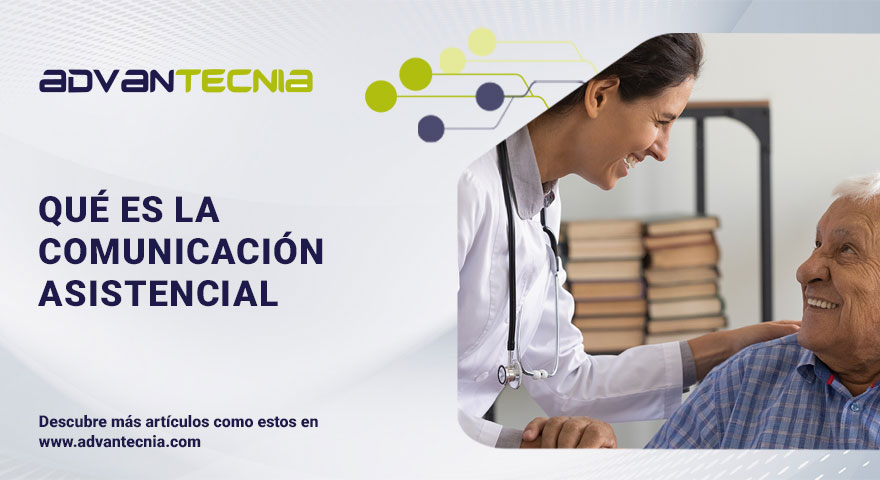
To understand what healthcare communication is, it can be defined as the efficient, two-way flow of information between healthcare professionals and each patient. It must ensure special attention for people who require it, either due to their physical condition or due to some type of functional diversity.
When we talk about healthcare communication, we usually refer by default to communication with hospitalized patients, not outpatients, although the concept includes both, along with their family members or caregivers. Below, we explain why investment in communication with certain types of patients cannot leave anything to chance.
Contenidos
What does healthcare communication consist of?
Communication between healthcare professionals and patients is an essential component for achieving optimal care.
Unlike outpatient medicine, where much of the communication combines verbal and non-verbal aspects and where healthcare professionals and patients usually see each other directly, hospital healthcare communication requires equipment capable of transmitting messages even under the worst possible conditions. Not all hospitalized patients are able to speak at all times or to use outdated patient–nurse intercom systems.
The importance of good two-way communication between healthcare professionals and patients
There are various approaches or ways to communicate with a patient. Healthcare professionals can adapt to different models in order to achieve more effective communication, understanding success as the flow and comprehension of all the information that needs to be conveyed, as well as the emotional component, which can be decisive in processing grief when there is no solution and the patient is referred to palliative care, or in another patient’s adherence to treatment.
However, in emergency cases and situations where seconds count, what truly matters is that communication can take place. This is often seen in emergency departments, but also in ICUs and even in resuscitation rooms.
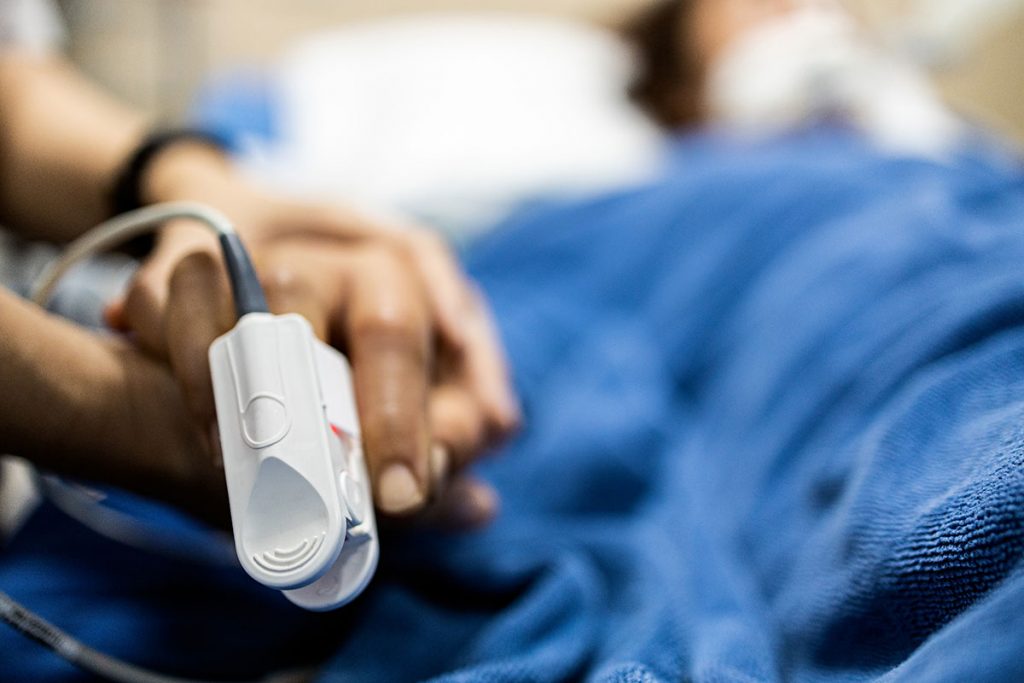
Alerting a nurse can save a patient’s life, since patients generally do not have someone monitoring them 24 hours a day. We must also consider intubated patients, sedated patients, the elderly, and any other profile that may arise. For this reason, devices for emergency alerts must be multichannel and should not rely on a single transmission device.
If you would like more information about our hospital intercom systems, contact Advantecnia.
Hospital communication management: technology in the service of safety
It can therefore be stated that effective communication is a fundamental requirement for fulfilling the Hippocratic Oath. In the case of hospitalized patients, safety must be added to the requirements of the devices used for healthcare communication.
Multichannel systems are needed, accessible to any patient, and it makes little sense to have several independent devices when a single system can be more effective. Systems that adapt to the needs of each type of patient require the use of advanced software, not just hardware.
The management of hospital communication must also address departments that are, in principle, not directly related to the patient, such as laboratories or the switchboard. Everything is interconnected, and it is unacceptable for an error to delay priority care.
In relation to the previous point, the engineers responsible for managing communications within a hospital or healthcare center must ensure easy fault detection and correction, as well as the availability of a rapid technical service when irreparable damage occurs in situ.
To ensure healthcare communication despite incidents, devices that operate simultaneously but use different power supplies are usually selected. For example, the hospital headwall is powered by the electrical grid, but it also allows connections to gas outlets and diagnostic devices that operate using a plug-and-play system or similar.
In turn, hospital headwalls—which usually include the patient–nurse call device—are reinforced when necessary with remote surveillance cameras operated by nurses. In this way, a small number of healthcare professionals are able to detect emergencies and unforeseen events affecting a large number of patients far more efficiently than if they were carrying out rounds and room-by-room visits. Thus, patient monitoring work for the most vulnerable patients is optimized.
Spanish regulations related to the safety of the elements used for communication between patients and healthcare staff are set out in DIN VDE 0834 Parts 1 and 2: 2000-04. Compliance is not mandatory, although devices that meet this standard provide an additional guarantee for the healthcare facility.
The DIN VDE 0834:2000-04 standard is a compendium of minimum requirements:
-
Calls must be indicated both acoustically and visually.
-
The color red indicates a call, while green signals presence.
-
Minimum and maximum values are established for the tone and volume of acoustic signals.
-
Devices must include an alert system in the event of disconnection, which does not exempt them from constant monitoring.
-
In all cases, the patient must be able to establish normal, direct communication. Such communication cannot be cut off or suspended remotely; assistance must be provided in the room where the patient is located.
-
Devices such as hospital headwalls must incorporate what is known as a reassurance lamp.
Hospital care must put itself in every patient’s place. This requires investment in a series of devices that ensure proper communication between the patient and healthcare staff under any circumstances, regardless of whether the patient has any physical or sensory limitations.
When considering hospitals and healthcare centers for elderly or disabled patients, it is necessary to adopt the broadest possible definition so that the answer to what healthcare communication is leaves no loose ends.