
Advances in three-dimensional printing technology are enabling medical professionals to create customized devices to improve the health and care of their patients. 3D printing in medicine is becoming a very interesting tool because it is increasingly adopted, as it offers a wide range of benefits such as speed, flexibility, and cost savings. It is a technology that is in full development and is gradually being implemented in the medical industry with the aim of improving patients’ quality of life and comfort.
At Advantecnia, we are experts in communication and healthcare support systems for hospitals and healthcare centers, and we provide valuable information about 3D printing applied to the healthcare sector.
Contenidos
What is 3D printing?
3D printing is a process by which a three-dimensional object is created, layer by layer, from a digital model, using various materials and techniques.
Advances in this type of printing have facilitated its adoption in countless fields, such as construction, the medical industry, prototype manufacturing, the toy sector, the aerospace and automotive industries, architecture and design, the fashion industry, etc.
Without a doubt, the application of this type of printing in medicine is the one that has the greatest overall impact, as it makes it possible to improve patients’ lives and health through truly interesting advances.
How is 3D printing being used in medicine?
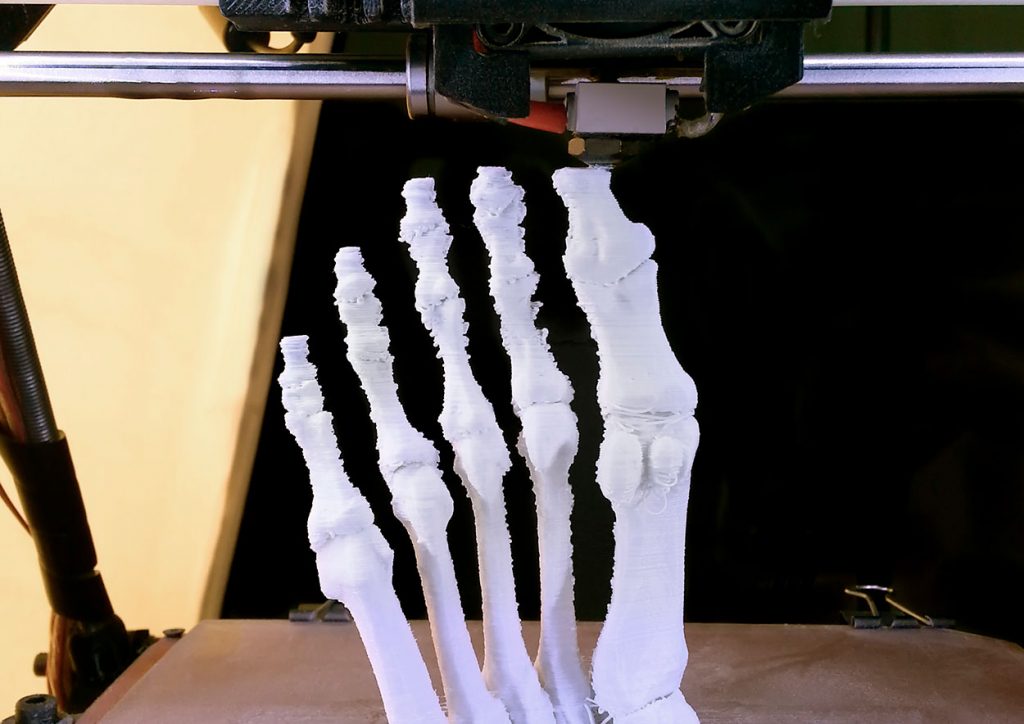
3D printing in the medical sector is having a major impact, as its application is ideal for many areas and tasks, ranging from surgical preparation—by printing exact replicas of bones and even organs—to the creation of all kinds of customized prostheses (arms, teeth, etc.).
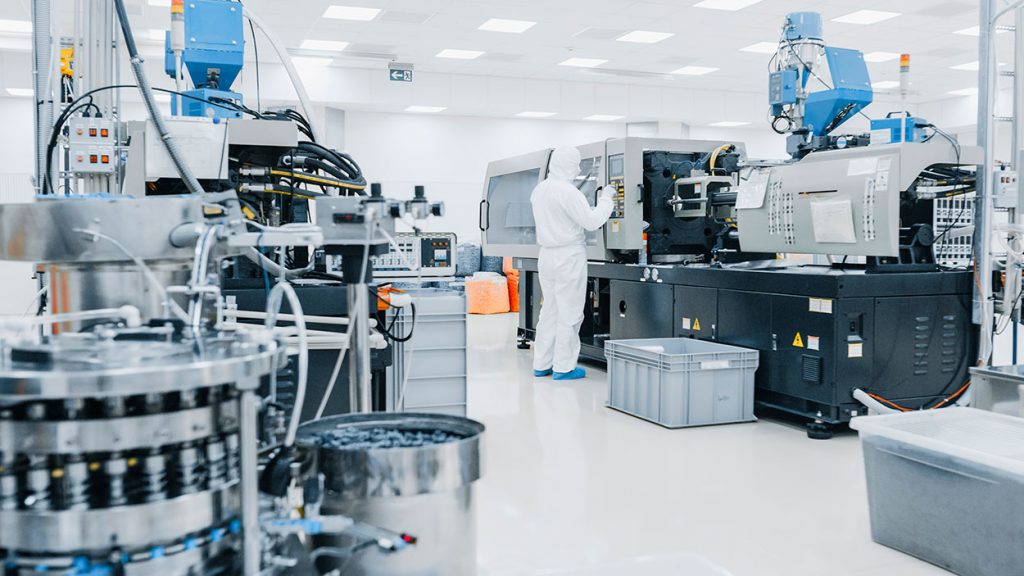
Although 3D printing in medicine is still in the early stages of global implementation, the reality is that more and more applications are being developed, as it represents an efficient, fast, and cost-effective way to obtain many of the elements needed on a day-to-day basis.
Uses and applications of 3D printing in medicine
Below, we present a series of applications that are currently being carried out using 3D printing in the healthcare sector:
Manufacturing of customized prostheses
One of the medical applications of 3D printing with the greatest impact is the construction of prostheses, as it allows professionals to provide patients with elements that truly adapt to their specific needs.
For example, thanks to 3D printing, it is possible to manufacture an orthopedic implant with joints and bones that adapts to the measurements and characteristics of a specific patient, without the process taking too long or having an exorbitant cost.
Applications in orthodontics
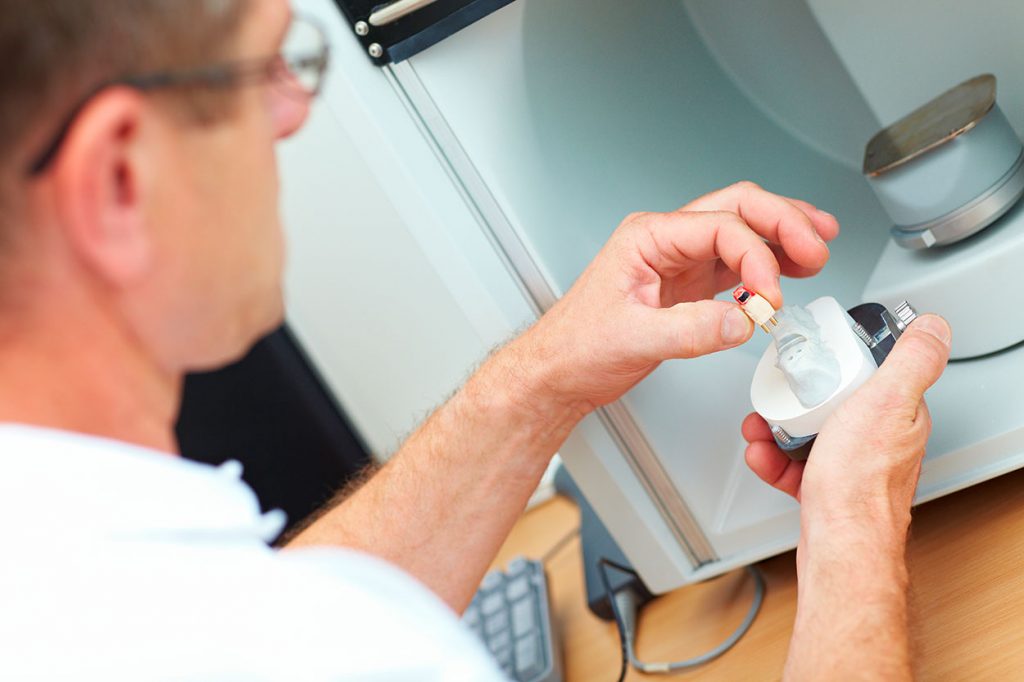
Another healthcare sector that is benefiting from all the advantages provided by 3D printing is dentistry, as it offers a fast and sophisticated manufacturing method for creating many key elements in this field, such as crowns, bridges, dental prostheses, transparent alignment splints, etc.
In addition, thanks to this type of printing, it is possible to create highly precise dental models, which can be used to conduct research on material behavior and dental biomechanics.
Bioprinting or creation of tissues and organs
This type of printing is very interesting for the medical sector, especially in terms of research, as it is allowing scientists to experiment without the need to use animals.
With the advancement of 3D printing of organs and tissues, the aim is to alleviate the major current problem in medicine, where it is difficult to find organ donors to meet the high existing demand.
Another example of progress in this type of 3D bioprinting is the creation of heart valves, where cells and biomaterials are combined to achieve a result identical to real valves.
Improving training processes
In relation to the training of doctors and healthcare professionals, 3D printing is being used to obtain exact replicas of organs, joints, muscles, bones and other parts of the human body, making it easier for students to practice in a realistic and safe environment.
Customization of surgical tools
In the field of surgery, 3D printing offers greater flexibility to surgeons, allowing them to create customized tools to facilitate specific procedures or techniques.
This versatility when creating elements and tools for practicing surgical interventions enables professionals to develop more efficient and advanced techniques, increasing the reliability of their procedures by having the ideal material for each case.
3D printing in pharmacology
In pharmacology, three-dimensional printing techniques are also beginning to be applied to achieve interesting results:
-
Printing medications, using techniques that allow tablets to dissolve more quickly.
-
Creation of specific packaging, making it easier for patients to take exact doses of a particular medication (ensuring treatment efficiency and reducing costs in the process).
-
Production of niche medications, which are not profitable when manufactured on a large scale.
We have talked about 3D printing in medicine, what it is and how it is currently being used by companies and professionals in the sector. This type of printing is revolutionizing the medical industry, opening new paths and opportunities to improve patients’ quality of life and health, reduce costs associated with the sector, and accelerate access to devices, prosthetics, and other elements.
Don’t hesitate to get in touch with us to receive the best advice so you can implement hospital communication and assistance systems, and make the most of communication in hospitals and healthcare centers.