Have you heard of the Da Vinci robotic system? Whether you are not yet familiar with it or want to learn more about it, you are in the right place to discover what it is, how it works, and what its advantages are.
The choice of communication systems plays a decisive role in the proper operation of hospitals and care facilities. That is why, as specialists in the field, at Advantecnia we want to guide you through one of the most promising robotic surgery solutions available today. Shall we get started?

Contenidos
What is robotic surgery?
We call robotic surgery any surgical intervention performed by a robot controlled by a surgeon. It is a state-of-the-art technique that allows surgeons to carry out surgical procedures with a very high level of precision.
Robotic surgery consists of attaching the surgical instruments to the robot’s arms so that the specialist can guide them via remote control. Thanks to this, it is possible to perform the procedure even if the surgeon is not physically present in the operating room.
Visualization issues, hand tremors, difficult access to certain organs… It is clear that robotic surgery has come to overcome the limitations of conventional surgical procedures.
Surgical robotization can be carried out through various technological solutions, with the Da Vinci robotic system being the most advanced platform available today. Not surprisingly, it stands out for its high performance. In addition, it is so versatile that it can be used in a wide variety of surgical interventions.
How does the Da Vinci robotic system work?
The Da Vinci robotic system is already used in thousands of hospitals and, to date, has been used to perform more than one and a half million procedures. In fact, it is the only robotic surgery platform approved to carry out thoracic surgeries.
What are the components of the Da Vinci robotic system?
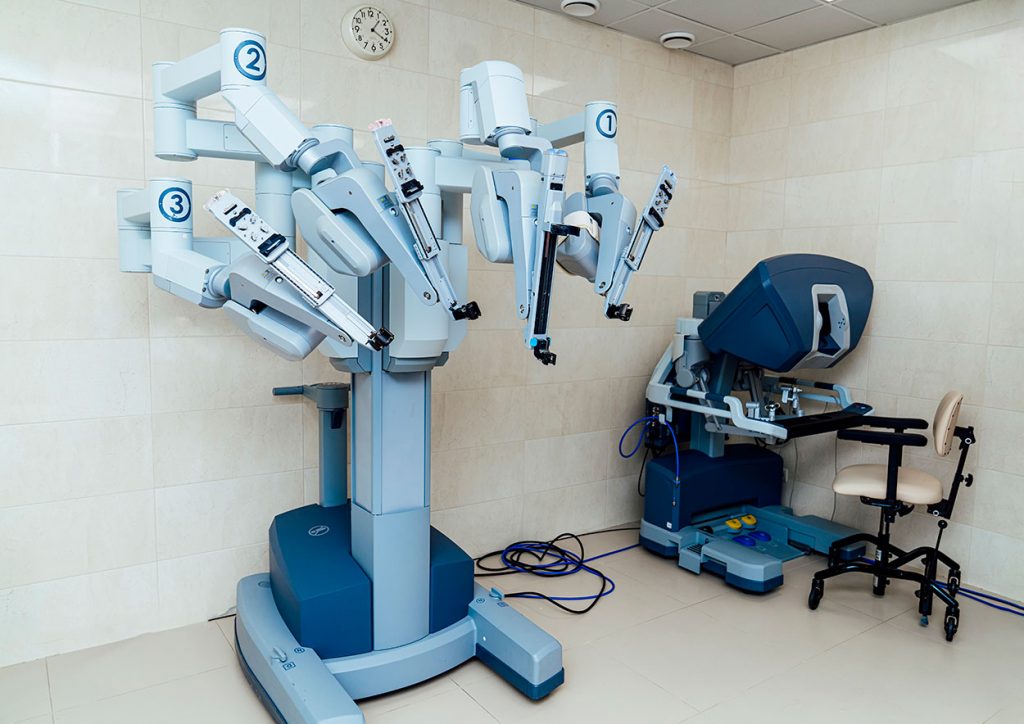
- Patient cart. The surgical component of the platform has four robotic arms that are operated by the surgeon from the console. Their specific positioning depends on the type of procedure to be performed and can be adjusted manually. This element features a laser pointer located at the center of its structure to facilitate the positioning of the arms.
- Surgical console. Located outside the sterile area, it functions as the control center of the equipment. The surgeon controls and manages the entire operation by guiding the robotic arms of the patient cart using hand controls and pedals. This component includes an endoscope that provides a three-dimensional view of the area being operated on.
- Vision tower. This unit is responsible for generating and processing the images viewed by the surgeon through the endoscope at the surgical console. It includes a touchscreen monitor and is configured by a professional located outside the sterile area.
How does the surgeon use this robotic system?
The specialists involved in a robotic surgery with Da Vinci are the same professionals who would participate in a conventional surgical procedure. On the one hand, the lead surgeon is the one who controls the operation through the surgical console. On the other hand, assisting surgeons are responsible for auxiliary tasks (such as changing instruments or positioning the camera correctly).
Seated outside the sterile area of the operating room, the lead surgeon sits at the surgical console to direct the robotic arms using their hands and feet. Any hand tremors the surgeon may experience are not transmitted to the machine, which guarantees completely precise movements. In addition, the surgeon has a high-definition, three-dimensional view of the surgical field at all times.
It is important to note that this robotic surgery system has multiple safety systems. That said, the most decisive of all is that the robot will never perform any action unless the surgeon has previously instructed it to do so. Likewise, the system will safely shut down in the event of any unforeseen issue that prevents it from operating correctly (for example, a power supply interruption).
In which surgical specialties can the Da Vinci platform be used?
- General surgery: bariatric surgery, lower third esophageal surgery, hepatobiliopancreatic surgery, colon and rectal surgery.
- Otolaryngologic surgery: tumor removal, obstructive sleep apnea syndrome, transaxillary thyroidectomy and parathyroidectomy.
- Cardiothoracic surgery: mitral valve repair, coronary artery bypass, interatrial communication, mediastinal and lung surgery, tricuspid valve repair.
- Urologic surgery: partial nephrectomy, pyeloplasty, radical prostatectomy, urethral reimplantation.
- Gynecologic surgery: tubal reconstructions, uterine tumors, hysterectomy, myomectomies.

What are its advantages?
- Provides maximum surgical precision.
- Allows the surgeon to operate with greater comfort (seated, without having to hold the instruments, with optimal visualization, etc.).
- Increases the surgeon’s freedom of movement, facilitating access and immersive visualization of the area to be operated on, even in very hard-to-reach locations.
- The Da Vinci robotic system is 100% safe, as autonomous decisions and movements by the machine are completely ruled out.
- The procedure is less invasive.
- Increases patient safety by eliminating the surgeon’s hand tremor.
- Reduces the risk of complications and surgical infections.
- Causes less blood loss, reducing the need for transfusions.
- Shortens hospital stay and speeds up recovery.
Conclusions
- Robotic surgery is performed by a robot directed by a surgeon. The Da Vinci robotic system is the most advanced platform for carrying it out.
- The components of the Da Vinci platform are the patient cart (operating robot), the surgical console (surgeon control panel), and the vision tower (image processing).
- Surgical robotization can be applied to multiple surgical specialties (general, cardiothoracic, urologic, etc.).
- Among the main advantages of using the Da Vinci robotic system are surgical precision, patient safety, and reduced surgeon fatigue.
It is clear that when choosing a solution for hospital communication, the Da Vinci robotic system is an option well worth considering. In fact, at Advantecnia we are experts in customizing its implementation to adapt it to our clients’ needs. Get in touch with us so we can help you.