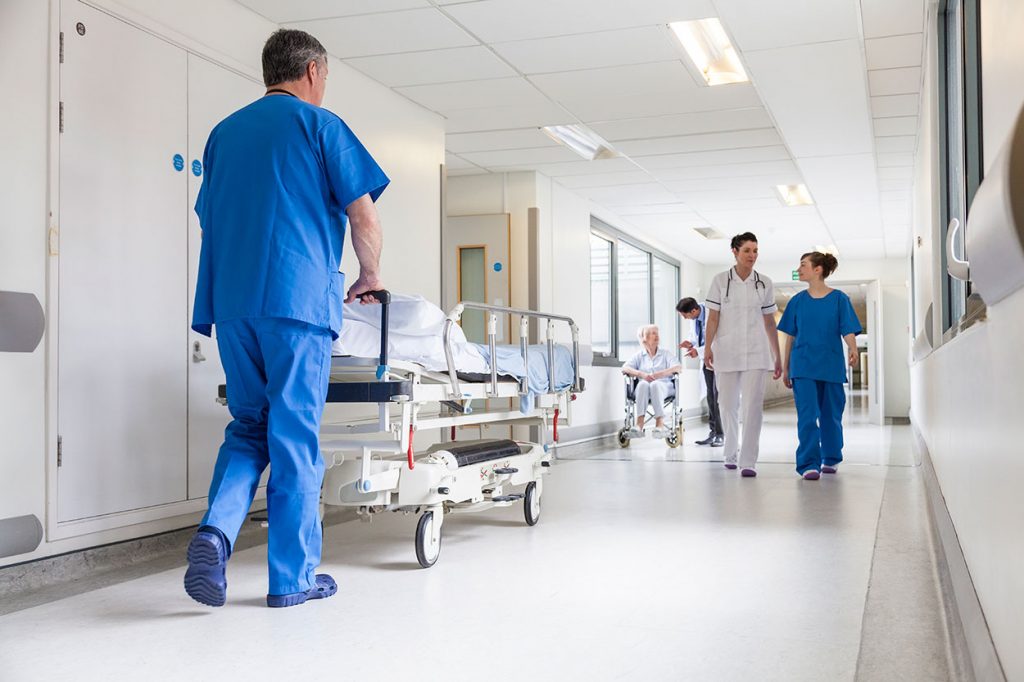
The healthcare sector has also joined the sustainability trend and is looking for ways to reduce its environmental impact. Therefore, energy savings and energy efficiency in hospitals are already common practices in the management of these types of centers.
Through different measures, the goal is to reduce energy consumption to lower hospitals’ operating costs, while also helping to protect the environment.
Contenidos
How to improve energy efficiency in hospitals?
Simple measures
These are actions that do not require special financing and can be carried out with the hospital’s own allocated budget.
Install LED lighting
Conventional light bulbs can be replaced with LED lights, whose energy consumption is much lower and which have a longer lifespan. Additionally, if motion sensors and light regulators are installed in low-traffic areas, it is possible to sustainably reduce the cost of the electricity bill.
Maintenance of climate control systems
Proper maintenance of climate control systems ensures their optimal operation, which helps reduce energy consumption.
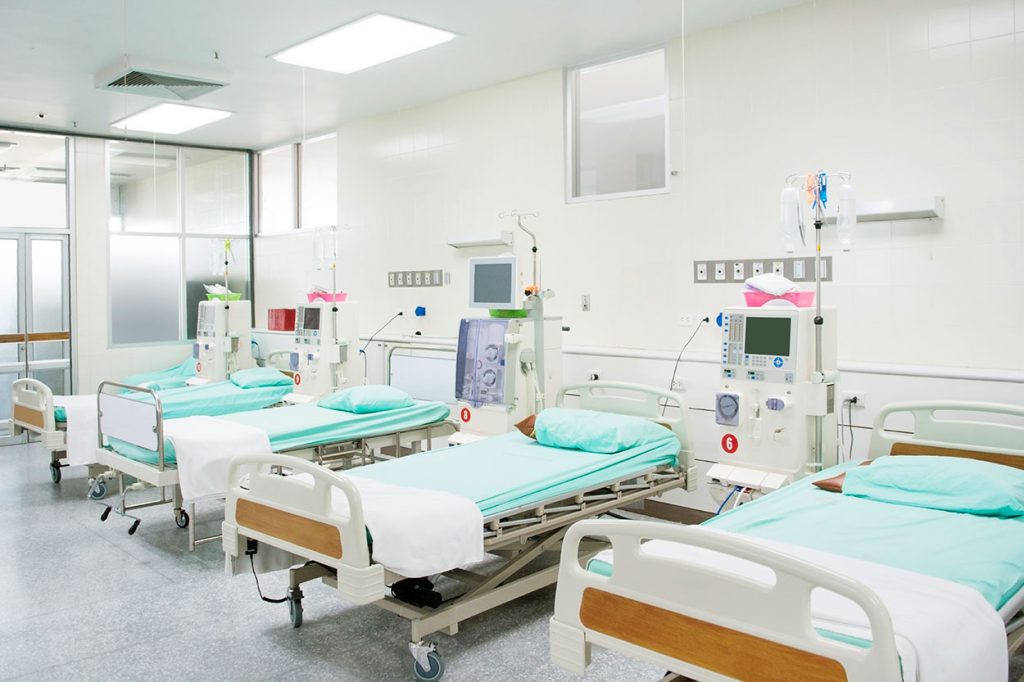
Programmable thermostats and making the most of natural light to warm spaces are other measures that can be taken to reduce energy consumption in climate control.
Staff awareness
Training staff in energy efficiency and in the measures they should adopt can significantly reduce energy consumption in the hospital. For example, raising awareness about the need to turn off the lights in rooms that are not in use.
Low-cost measures
These can be implemented with a single investment by the administrator. Since the cost is not high and the savings are significant, the investment is quickly recovered.
Installation of automatic doors
A large part of the hospital’s climate control is lost because many doors to consultation rooms and patient rooms remain open. An automatic opening and closing system helps ensure that the temperature inside the rooms remains at an optimal level and that it is not necessary to increase the thermostat in winter or lower it in summer.

New climate control equipment
If climate control systems are more than 10 years old, their energy consumption is not within the most efficient parameters. Renovating the climate control installation leads to more comfortable spaces and a system whose operating cost is much lower than the current one.
Reconstruction actions
These require a significant investment and a prior technical feasibility study. For example, improving the façade insulation system of the entire hospital.
What measures are there for energy saving and efficiency in hospitals?
Energy consumption
Energy saving and efficiency in hospitals are a real necessity, because these buildings have consumption levels that can vary greatly depending on the efficiency measures that have been implemented.
Hospitals consume energy 24 hours a day, seven days a week, and it is estimated that they account for 2% of the total electricity consumed nationwide. However, it has been observed that those with state-of-the-art technology systems focused on sustainability, such as those from Advantencia, achieve significant savings.
Current situation and proposals
Financial savings can reach up to 20% within three years. In addition, sustainable hospitals are more comfortable for patients and staff.
If we talk about improvements that can be implemented, it is especially important to highlight those that affect climate control and lighting.
Climate control systems
The presence of spaces with inadequate temperatures is common in hospitals. It is not unusual to find rooms where it is very hot, and consultation rooms where the temperature is noticeably lower.
Detecting these types of spaces and taking measures to achieve thermal comfort will improve the well-being of everyone who, for work or health reasons, has to spend a lot of time in the hospital, and will also contribute to energy savings.
Another measure that can be adopted is to carry out a periodic review of thermostats and timers. These are often manipulated and not reset to their original settings, which leads to unnecessary energy consumption.

Ventilation
Ventilation is especially important in hospitals, which need to be disinfected and have constantly renewed air. For this reason, the motors of ventilation systems are a significant source of energy consumption within the hospital’s electricity bill.
To save energy in this area, it is a good idea to determine which zones do not have special ventilation needs, in order to install air renewal systems there that consume less energy.
It is also possible to install variable-speed fans, allowing ventilation to be regulated at any time according to needs. In addition, carrying out regular maintenance of all ventilation systems will help ensure they operate optimally and do not consume more energy than necessary.
Lighting
Lighting accounts for between 20% and 35% of a hospital’s total electricity consumption. Savings can be achieved by installing LED luminaires, using parallel circuits in areas with greater natural light, turning off unnecessary lights, and implementing automatic on/off systems through timers or presence detectors.
Cogeneration
It involves obtaining energy and heat through generators powered jointly by electricity and fossil fuels. If the hospital generates more heat than it needs, the excess can be sold to nearby consumers.
Energy savings and efficiency in hospitals are possible through state-of-the-art measures and systems. At Advantecnia, we help hospital centers continue to advance with different sustainable solutions in assistive communication, automation and security, management, and entertainment. If you want to learn more about them, get in touch with us.