The functions of a nurse in a hospital are usually of a dependent nature, that is, those requested by a physician. However, independent functions in this environment, such as monitoring hospitalized patients, often require a higher level of attention than what is needed, for example, in a health center.
In hospitals, immediate response is often required, as it is not uncommon for life-threatening situations to arise unexpectedly. For this reason, having a multichannel service for the Patient-Nurse Call is a priority in this setting.
There are professionals who have received additional training to perform their role, such as those in charge of operating rooms or ICU wards. However, every graduated nurse, regardless of the type of patients they care for, must be trained to carry out a series of functions. Let’s take a look at what they are and, among them, those that may occur in a hospital, either among inpatients or through outpatient consultations.

Contenidos
Responsibilities of nurses
Nurses have the following daily responsibilities within their assigned tasks:
Disease prevention
When a patient needs nursing care, the nurse usually explains how they should take care of themselves after leaving the consultation until the next visit. This applies to monitoring age-related illnesses, but also when wound care is needed: should I clean the wound as well? When does joint pain stop being normal for my condition and when should I consult a doctor? When should I go to emergency services? In the case of a blood pressure imbalance or an asthma attack, what are the signs or symptoms that indicate I should call 112, and when can I wait to go to the emergency department of my hospital or health center? What symptoms may indicate a stroke?
Health maintenance
Sometimes, in hospitals, the informational guidance that a patient needs to know in order to carry out proper treatment is provided by the doctors themselves during consultations. However, there are many chronic illnesses whose follow-up can be delegated to nurses, such as monitoring glucose levels and blood pressure, or performing a series of diagnostic tests whose results will later be interpreted by the doctor (an ECG, an X-ray, etc.).
Care, rehabilitation, and social integration of the patient
Work carried out in coordination, depending on the case, with physiotherapists and social workers.
Health education
Sometimes the patient is not trained to take care of themselves, and nurses must act as a link between the doctor and the caregiver at home.
Training, administration, and research in nursing
Hospitals and health centers usually have students in training. Nurses are responsible for training other colleagues. On some occasions, they perform administrative tasks and patient care, and of course, there are nurses in charge of organizing shifts and optimizing the use of available resources.

Where are nursing duties regulated?
The duties of nurses were regulated by an Order dated April 26, 1973, but this regulation was repealed by Law 55/2003, that is, by the Framework Statute for statutory healthcare personnel.
However, this Statute does not contain a catalog of functions, so those established by the 1973 Order remain in force on a transitional basis. For practical purposes, we must consult documents where the new functions of nurses, which have been added as technology has advanced, are not detailed.
In addition to this regulation, there is Royal Decree 1231/2001 of November 8, which approves the general statutes of the General Council of Nursing Associations of Spain, the General Council, and the regulation of professional nursing practice.
Although this last regulation is not intended to define nursing functions, it does provide some interesting information that is closer to the tasks performed by hospital nurses and those who work in day centers.
Functions of a nurse in a hospital
Moving on to nursing work in a hospital, where we mentioned the need for an immediate response in many cases and the support of software and hardware services to achieve control of several patients at the same time, we talk about different types of functions.
Independent functions
Independent functions are those that fall within the tasks that a nurse can carry out without medical supervision:
- Prepare the necessary medical devices before an examination.
- Ensure that each patient follows an appropriate regimen according to their illnesses: soft diet, low-salt diet, gluten-free diet, etc.
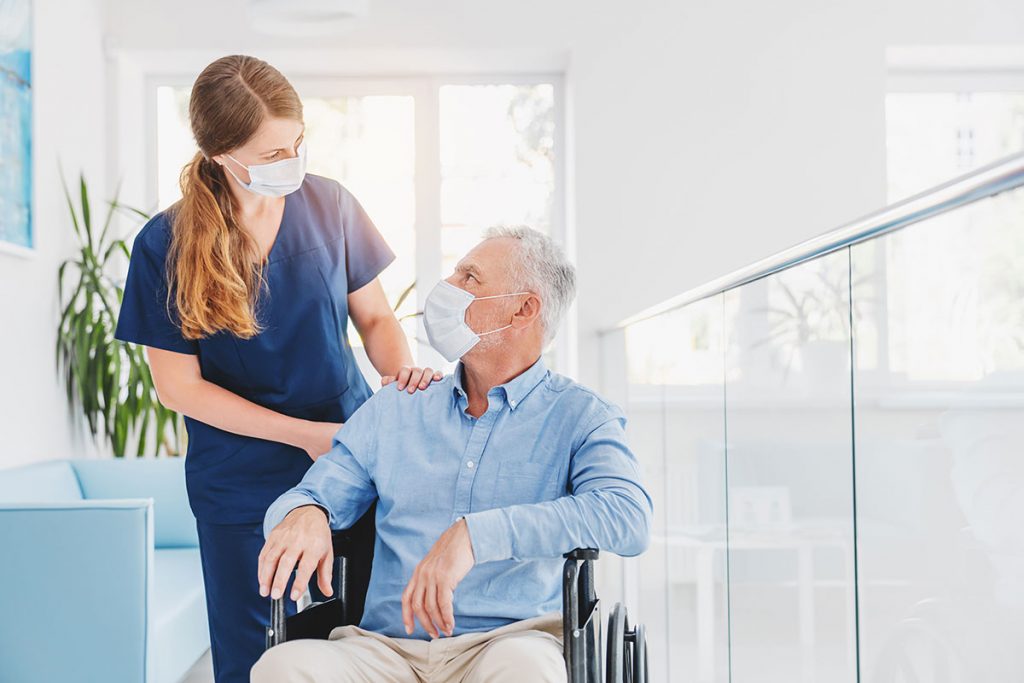
- Take care of the hygiene of critically ill patients and those who must remain on strict bed rest, for example, during the hours following major outpatient surgery.
Dependent functions
Dependent functions are those carried out by the doctor or those that require the physician to review certain results, as in the case of performing an ECG.
Also considered dependent functions are those based on observation to help the doctor with the subsequent diagnosis or to carry out initial triage in emergency services, assigning those colored labels that indicate the level of severity and priority of care, determining when a patient should be treated in special units, such as the short-stay unit.
Other functions
These include tasks that require additional training for the nurse, such as assistance in the operating room. It is also the nurses’ responsibility to ensure proper maintenance of instrumental equipment, its cleaning and organization, along with the management and custody of medical record files.
The duties of a nurse in a hospital tend to be more varied than in a health center, which is why shifts and schedules are distributed, sometimes according to each professional’s specialization. Among the most stressful tasks are immediate care in cases of life-threatening risk and triage in emergency services. Monitoring in modern hospitals, especially on certain wards and in the ICU, must rely on multichannel technology. If you need more information about hospital assistance and the options available for your healthcare center, get in touch with us.