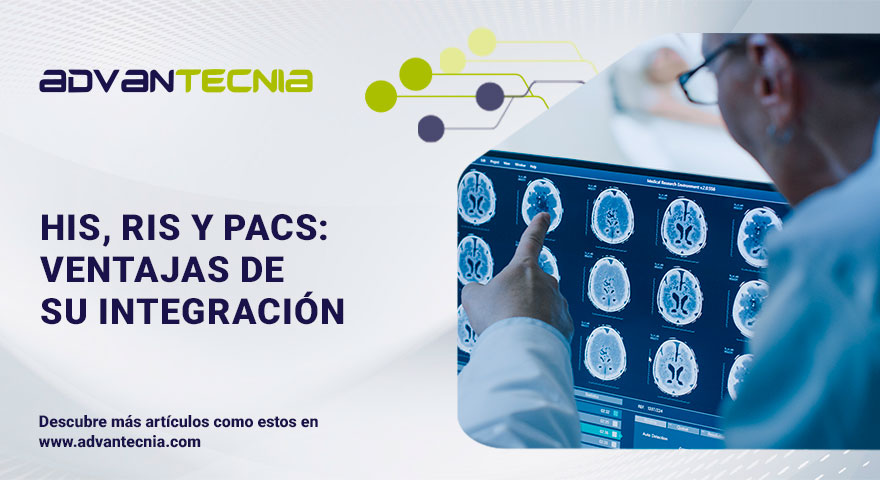
The integration of HIS, RIS, and PACS systems has been fundamental to improving the quality of healthcare, since it allows access to a patient’s information from a single place.
In hospitals, a huge amount of data is generated for each patient, so over time, accessing and filtering this information can become a problem. For this reason, all these systems have emerged and ultimately have been integrated.
Contenidos
What is RIS?
RIS is a radiology information system, a software program specialized in storing images from medical tests such as X-rays, although it is not limited to that. It is also responsible for scheduling exams and generating reports, as well as managing images that can be sent from one doctor to another without the need to print them.
RIS vs. HIS evaluation
Before making a comparison between the two, it is important to understand what an HIS is. An HIS is a management system that is somewhat similar to RIS, but in this case, it covers all areas of the hospital.
Thus, an HIS can manage patients, billing (in private healthcare), and also handle human resources administration, such as shifts, days off, hiring, etc.
In this way, comparing both systems is not entirely accurate, although we can say that RIS is more economical and easier to manage, since it is much more limited by focusing exclusively on the radiology area.
What is PACS?
It is another system that is very similar to RIS, as it is used to manage information in the field of medical imaging, such as X-rays, ultrasounds, CT scans, etc.
In this case, unlike RIS, which also manages radiology patients, PACS only deals with images, retrieving and storing them.
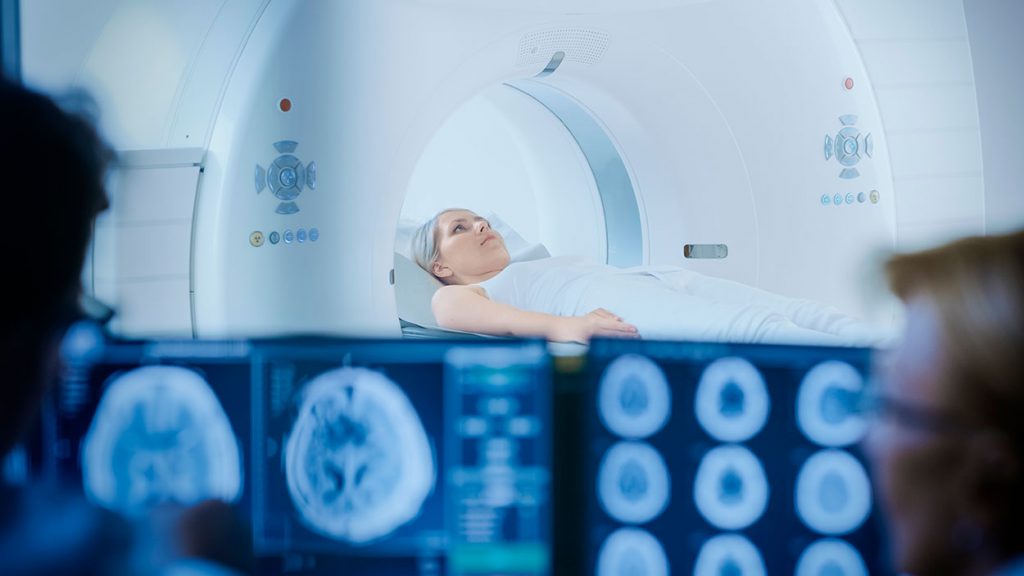
What are the advantages of HIS, RIS, and PACS?
The three software packages carry out their work separately, but currently what hospitals are doing is integrating all three, so that doctors and hospital staff can access patient data.
This does not mean that professionals stop communicating with each other (here we could talk about the TETRA communication system and what it consists of), but they do it in a different way when it comes to diagnostics. Therefore, these systems provide a series of advantages:
Remote access
Doctors and patients do not need to share the same physical space in order to view the necessary information, which makes it possible for professionals who are in different cities, or even in different countries, to collaborate.
Improved quality of care
Better care is always provided when doctors have all a patient’s data available at the push of a button. By accessing HIS, RIS, and PACS, they can get a clear picture of the patient’s overall condition without overlooking any details.
Greater efficiency
Doctors are freed from administrative tasks that do not bring any benefit to their patients. These systems allow them to focus on care and diagnosis.
Reduced costs
Both in the public and private healthcare systems, there are costs associated with managing imaging test data. Here, it is not necessary to print an X-ray or store it on physical media, which results in significant savings.
Information is always accessible
One of the biggest problems in certain healthcare systems is the fragmentation of information. This means that sometimes a doctor cannot access the complete medical history of their patient.
The integration of this software puts an end to this issue, since all the necessary data is available on a single screen, just one click away, without the professional having to search for it.
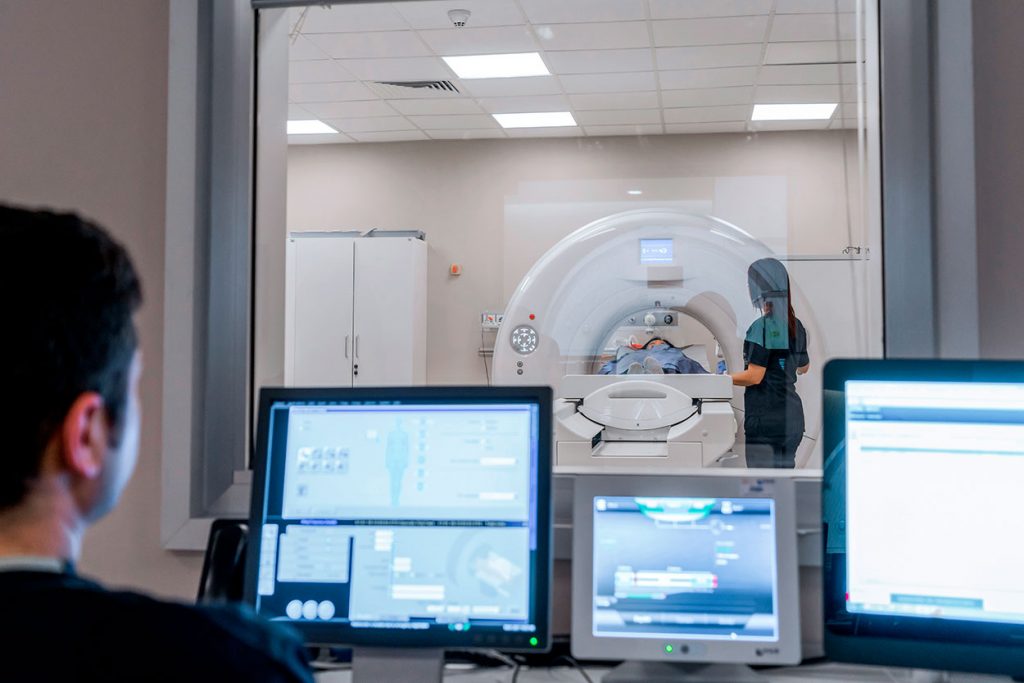
How are they integrated?
This integration is not easy and must be carried out by a specialized company, always starting with a prior consulting phase, since it is not something within everyone’s reach. For this reason, if you are thinking about integrating these systems, you can contact us and we will advise you with a personalized solution.
Data migration must be gradual, and the different systems need to implement HL7, which ensures that the integration process will be feasible. In addition, it may be necessary to modify workflows and provide staff training, although this is easier if they have already used a HIS, RIS, or PACS system.
Workflow of HIS, RIS, and PACS
When the three systems are integrated, the workflow becomes smoother and several functions can be automated, such as worklists, data storage and transmission, and database synchronization, among others.
Now, when a radiologist has a patient, they will no longer need to search for their data in different places. Instead, all the information will be listed on their computer screen, allowing them to view the patient’s medical history without needing to contact other colleagues.
This integration also helps avoid data entry errors, which is essential in medical processes where names, surnames, or prescribed medication should never be entered incorrectly.
This mainly happens because every time we go to the hospital we are asked to provide our data again, something that is avoided with this integration, since once we are registered in the system, our information can always be accessed from any computer.
Having patient data is important, but it must also be well structured and centralized. This is exactly what HIS, RIS, and PACS systems provide, supporting everything related to radiology and even going further to facilitate the work of healthcare professionals.