Promoting the autonomy of elderly individuals and the sick is a priority in the health and care sectors. This has made Spain a global reference in telecare.
Thanks to technological advancements, the elderly or those suffering from illnesses can live peacefully in their homes, with the reassurance that they will receive immediate help if they experience any problems.
Contenidos
Telecare in Spain
Telecare has evolved significantly in a short time, thanks to the great technological advances achieved in recent years. Telecare has not wanted to stay behind and has embraced the most advanced technologies.
The result is that users now enjoy a better connection and faster attention, but the goal is to keep progressing. Technology is being used to help prevent behaviors and detect risks, thus protecting the safety and health of those using the services of telecare.
Experts emphasize the need to improve predictive, proactive, and personalized models through cutting-edge technology. At the same time, there is a need for a cultural shift in telecare centers, so that emerging technologies are seen as allies in providing comprehensive care at the social, clinical, and psychological level.
Telecare as a health strategy
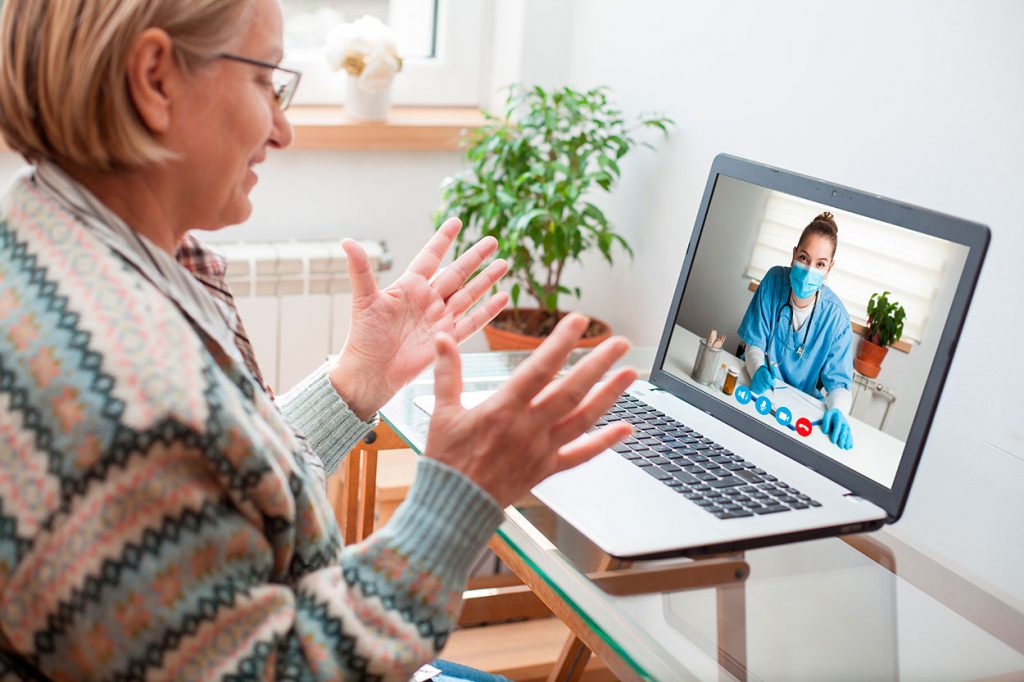
Not too long ago, telecare services were associated with elderly people, but this is changing. The concept of telecare has expanded, and technology is now being applied even in the case of sick people, including young people. It allows for direct communication between the user and a team of professionals who can provide specialized care.
On a global scale, various studies have been conducted with individuals suffering from heart failure. This illness poses a risk to life and increases the likelihood of hospital admissions. Additionally, the frequency of hospitalizations increases the risk of infection and drives up treatment costs. As a result, telecare has been used for heart failure patients, offering them specialized care at home.
The result has been that quality of life has improved for those with heart failure, who now enjoy more autonomy and can receive care quickly at home when they feel unwell. Medical specialists also feel more satisfied with this system, as it allows them to monitor their patients in real time, even when they are at home.
The findings from these studies can be extrapolated to other illnesses, especially those that manifest in chronic form. Telecare is thus becoming a strategic tool for patient care, enabling continuous monitoring of signs and symptoms that could warn of potential issues.

Telecare: uses and advantages
As experts in healthcare technology, Advantecnia knows that telecare services have multiple advantages and more uses than one might think at first glance. Let’s review them.
Healthcare at a physical and psychological level
Telecare allows access to specialized healthcare services without the need for travel. This is a great benefit for those living in areas without healthcare centers and for people with mobility problems.
Telecare is much more than just a telecare button. It is a combination of technologies that monitor the patient’s health. If the system detects that the patient is unwell, it can contact health specialists immediately.
Current technology allows healthcare professionals to keep track of the vital signs of patients, even if they are not physically in the same place, thus offering better care.
In mental health, detecting possible problems is not always easy, but telecare systems allow for immediate communication with healthcare professionals, enabling those who may be going through a mental health crisis to get in touch with an expert.
In both physical and mental health, telecare systems help in initial treatment and also in providing routine follow-up on the patient’s health, particularly in emergency situations or in pre-hospitalization and post-hospitalization care.

Advantages of telecare
The main advantage is that the combination of technologies helps take care of the health and security of individuals in a much more effective way than before, as the user can receive immediate medical attention if their symptoms worsen.
This makes the user feel much safer and increases their independence. There is no need for the person to be accompanied all day or remain bedridden at home, as they can lead a normal life and manage their illness while always feeling confident that help is available if needed.
In the case of elderly individuals, the telecare system has notably improved their autonomy and quality of life. It allows them to live peacefully at home without needing to be moved to a nursing home.
For sick individuals, the benefits are generally the same. The person can spend much of their time at home rather than in the hospital, which positively affects their mood and recovery.
Telecare is now present in medicine and provides attention to patients and the elderly. If you want to implement such solutions, get in contact with us.