The TETRA network is a professional mobile communications standard used globally to provide a reliable and secure environment. It is a system specifically developed to meet the communication needs of large organizations and public services, such as security forces, firefighters, emergency services, the military, healthcare centers, etc. The TETRA communications network guarantees high service availability, which is essential for many of the groups mentioned above.

Contenidos
What is the TETRA network and what is it used for?
The TETRA network (Trans European Trunked Radio) is known as a broadband mobile communications network that enables high-quality voice and data communication in real time. It is mainly used in professional environments and public services, where stable, fast, and reliable communication is required.
It is a standard defined by the European Telecommunications Standards Institute (ETSI) that allows the unification of professional digital radio communications at both European and international levels.
Benefits of the TETRA Network
The TETRA network offers a series of benefits for organizations and services that need secure and reliable mobile communication. Among its many advantages, we can highlight:
Security
Security is one of the most important aspects of this type of mobile network, as it incorporates a series of security measures to ensure that the information transmitted through it is secure and confidential (all transmitted data is encrypted, so it reaches its destination with privacy and integrity).
Some of these measures include user authentication, air interface encryption (AIE), terminal disabling, and end-to-end encryption (E2EE).
Availability
This network offers high availability thanks to its ability to provide uninterrupted communication at all times and anywhere. In addition, the TETRA network has wide coverage, ensuring that users can communicate anytime and anywhere.
In the event of a communications failure, TETRA allows operation in terminal-to-terminal mode, which guarantees continuous access and data transfer.
The TETRA network provides coverage at local, regional, and international levels. By offering a high-availability environment, this type of network is ideal for services where communications must always remain active, such as emergency or healthcare services.
Confidentiality
TETRA is a type of network that uses complex encryption processes to guarantee integrity (the transferred information cannot be modified) and privacy (no unauthorized third party can access the content of communications), creating an ideal environment for establishing secure and confidential communications.
This means that the information transmitted through the TETRA network is protected against eavesdropping and external attacks, providing a high level of security.

Integrity
All information transmitted through the TETRA network is accurate and has not been modified during transmission, so it reaches the receiver in the same form in which it was sent.
Authentication
When using the TETRA network, only authorized users can access it, as it incorporates a sophisticated authentication system that allows meticulous and precise control of access.
Compared to traditional mobile networks, the TETRA network provides a highly secure environment that prevents hackers and cybercriminals from gaining access.
Air Interface Encryption (AIE)
Air interface encryption, or AIE (air interface encryption), is one of the security measures implemented by the TETRA network. It consists of encrypting the information transmitted through the communication channel (protecting voice traffic, signaling, and identity over the radio communication segment, known as the “air”).
Terminal disabling
Disabling or “killing” a terminal is another of the interesting security measures of the TETRA network, as it allows network administrators to deactivate user terminals that have been lost, so they do not pose a risk to the network or to the rest of the devices connected to it.
E2EE encryption
End-to-end encryption or E2EE (end-to-end encryption) is an additional security measure implemented by TETRA to encrypt all the information on the user’s device and decrypt it when it reaches the receiver’s terminal.
This process guarantees greater confidentiality and data security throughout the entire transmission and reception process.
How does the TETRA network work?
The TETRA network is based on a digital radio technology that uses a time-division multiple access (TDMA) system to transmit information.
This system divides the communication channel into time slots and assigns each slot to a different user, allowing multiple users to use the same communication channel at the same time without interfering with each other.
What applications does TETRA have?
The TETRA network has a wide range of applications in different sectors thanks to the great advantages it provides.
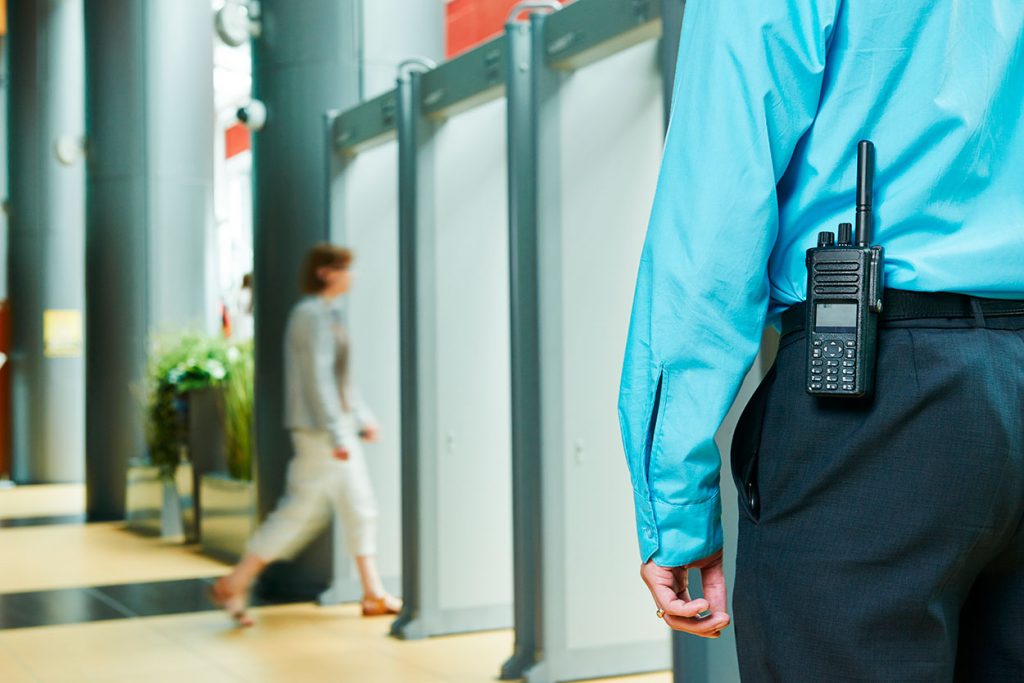
For example, in hospital security it plays a very important role in guaranteeing a safe environment with full availability of the services and applications typical of this type of healthcare centers. Some of the most common applications are:
-
Public security (medical services, emergency services, rescue teams, etc.).
-
Transport systems (communication between drivers, terminals, etc.).
-
Industry and commerce (communications within a factory or between a network of stores).
-
Military (for secure communications in the military field and state security).
The TETRA communications network is the ideal solution to guarantee a wireless communication system that ensures high availability and the highest level of protection for the information that is transmitted.
At Advantecnia, we are specialists in hospital communication and assistance systems, and we offer you our professional services so you can enjoy the best communication system in your medical center or hospital. On our website you can access the contact form to send us your questions, doubts, or suggestions.