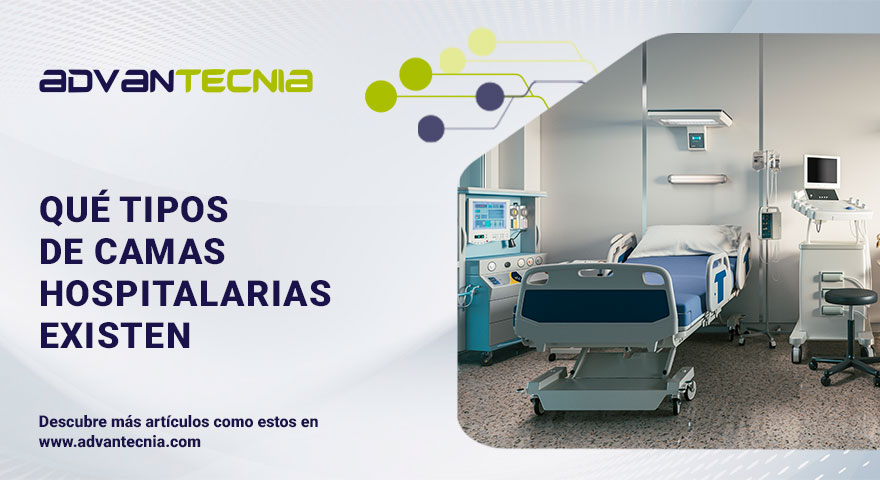
Having a clear understanding of what types of hospital beds exist is essential in order to offer patients a system that truly adapts to their needs. Thanks to technology, hospital beds have evolved remarkably and are now capable of responding much better to the demands of people whose mobility may be reduced.

Contenidos
What are hospital beds?
When a person is ill or injured, the amount of time they have to spend in bed increases, and in some cases it can reach 24 hours a day. If a regular bed were used in these situations, discomfort and pain would begin to appear in the patient after just a few hours.
A hospital bed is one that is intended for the continuous care of patients. Despite its name, it is not only used in healthcare facilities; it is also common to see them in nursing homes for the elderly and even in private homes.
Characteristics that a healthcare bed should have
The first and most essential requirement is that it must be comfortable for the patient, since we start from the premise that they may have to spend many hours lying down. The bed, understood as a whole, should provide comfort, but also safety, offer quality sleep, relieve pain, facilitate patient movement, and also make the work of healthcare staff or caregivers easier.
They are often equipped with swivel wheels to improve patient mobility and have bumpers to keep them in good condition for a longer period of time.
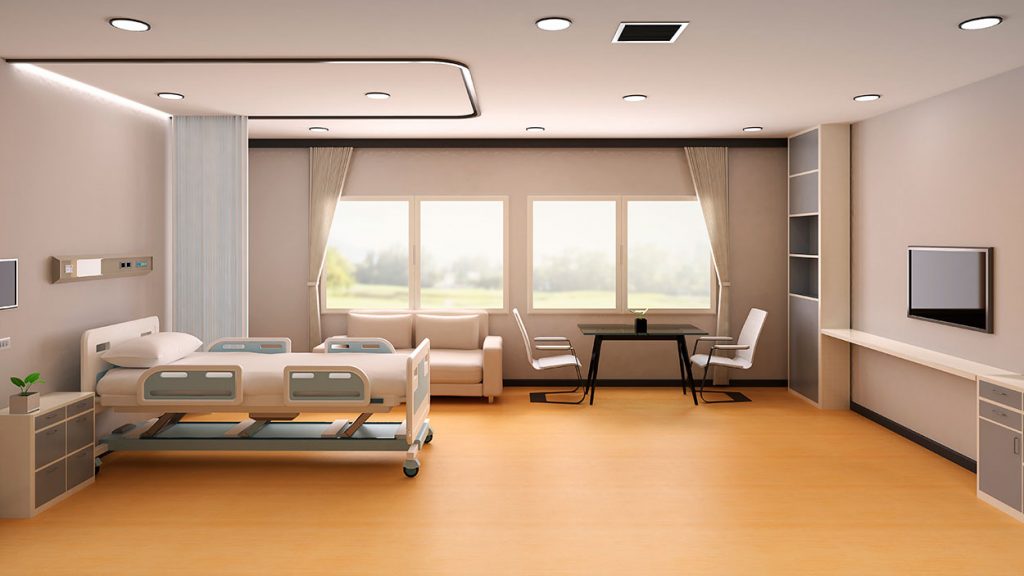
What types of hospital beds exist?
Rigid beds
These are beds in which the bed base cannot be moved; it always remains in the same position, meaning the patient cannot raise either their head or their feet.
The structure is made of metal or wood, and it is common for the bed to be equipped with one or two side rails. These are simple beds that, in many cases, do not even have wheels, which makes them especially uncomfortable for both patients and caregivers.
Adjustable beds
These are models in which the bed base is adjustable and allows both the head and foot sections to be raised. Thanks to this, it is easier for the patient to change position and they do not have to remain lying down at all times.
Within this general category of adjustable beds, there are several subtypes that are worth knowing about.
Electric adjustable beds
They allow for greater patient autonomy, as the bed can be adjusted using a remote control without the need to rely on a third person. Within this category, there is a special type known as the bariatric bed, designed to offer maximum comfort to people who are overweight.
In addition to the mobility of the bed base to raise the legs or the head, it is common for these beds to also be height-adjustable, which makes it easier for the patient to get in and out of bed.
Manual adjustable beds
These are the classic models that were commonly seen in hospitals until a few years ago. They allow the patient’s legs to be raised and the patient to be repositioned, but the system is operated manually, which reduces the patient’s autonomy.
Levitation beds
They are especially indicated for severely burned patients, as they allow patients to remain elevated above the bed and not be in contact with anything, which helps improve their well-being.
To achieve this elevation, heated air is used to create suspension.
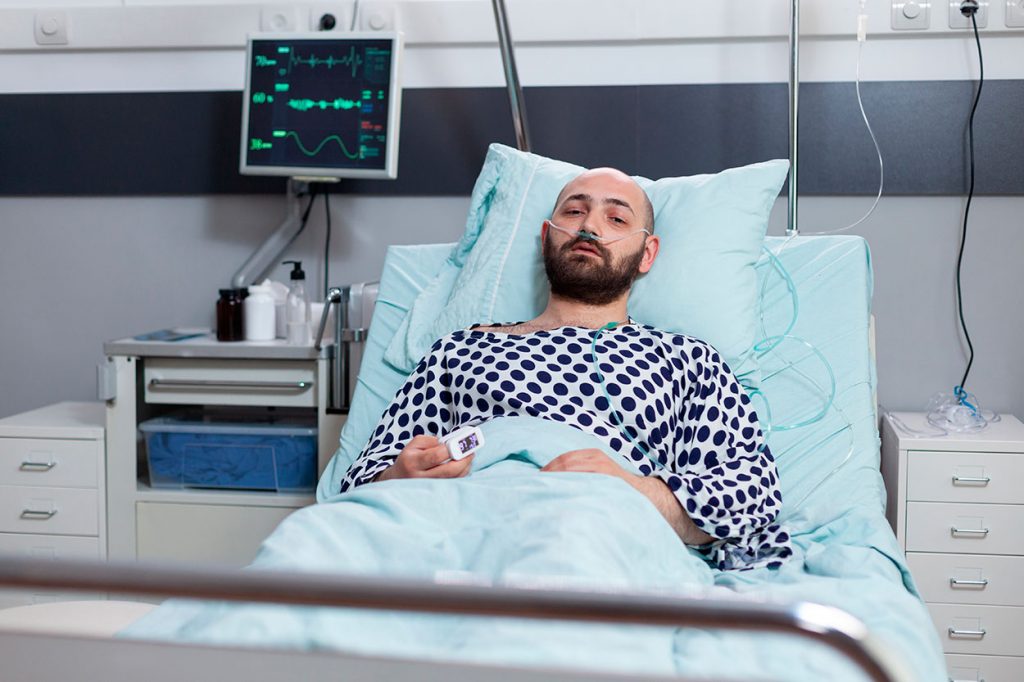
The patient–nurse call system
Hospital beds have evolved to offer greater comfort both to patients and to those responsible for their care. In order to provide even more autonomy to people who must remain bedridden, the patient–nurse call system, which we offer at Advantencia, has become one of the latest revolutions.
It is a software solution that integrates into hospital headboards, walls, or articulated arms, and allows for a more direct and simpler connection between the patient and their caregivers, as well as among healthcare staff themselves. It is a scalable modular solution that combines hardware and software to enable fast and easy communication.
Among its features, it is worth highlighting that it allows remote control of the rooms’ indicator lights, making the work of nursing staff easier. It also includes a set of buttons for healthcare personnel that allow them to activate different alarms and request assistance if necessary.
Its proximity reader allows staff to cancel the alarm using an identification card, with the system recording which professional responded to the patient’s call.
In order to ensure that everything is in order in the room and that the patient is in the best possible conditions, it incorporates a temperature and humidity sensor mechanism.
The typical call button available to patients to summon nurses is replaced by a push-button mechanism with voltage-free contact, which is well protected by a casing to prevent false alarms, yet is very easy for the patient to activate. It comes with a cable of up to two meters in length for greater convenience.
It is also possible to choose a more advanced option, in which the pear-shaped push button includes additional buttons for light control, so that the patient does not need to get up to turn the light on or off.
All of this is managed through the most advanced software—a tool that greatly facilitates the work of healthcare staff and enables them to provide better care. It prevents time loss, such as when several nurses go to the same room because they are unaware that another colleague is already there.
Taking into account what types of hospital beds exist and how new technologies can be integrated into them, it is clear that patient care has now reached a new level.